Most hunters can think of a rifle they would recognize without seeing the maker’s name.
Maybe it is family owned for years, Maybe it has a darkened spot around the grip, an old sling, a scratch near the fore-end, or a stock that has been refinished once already. You know the rifle by those details because they came from use, not from a catalog.
That is usually how hunting gear becomes worth keeping. It does not happen because the product was expensive or because somebody described it as an heirloom when it was new. It happens when a good tool stays useful long enough to become familiar.
There is a practical side to that kind of ownership. Equipment meant to last for decades needs good materials, sound construction, sensible geometry, and a way to deal with normal wear. It also has to be worth using in the first place. A rifle that looks exceptional but carries poorly will not become more useful with age.
At WOOX, that is where heritage and engineering meet. The goal is not to reproduce an old rifle for the sake of nostalgia. It is to understand why certain materials and forms lasted, then use modern manufacturing where it improves the finished tool.
A Rifle Has to Earn the Years
A hunting rifle that stays with one owner for twenty or thirty years usually does a few basic things well. It fits the way that person hunts, carries without becoming a burden, and remains predictable when it comes to the shoulder. The stock, barrel, action, optic, sling, and ammunition work together rather than competing for attention.
The stock has a larger role in that relationship than its specification line might suggest. It is where the support hand sits, where the face meets the comb, where the rifle meets the shoulder, and where much of the weight is felt while moving through the field. A stock designed for a rifle that will be carried for hours may need different geometry from one designed mainly around supported range or competition shooting.
This is why long-term ownership starts with fit and function rather than finish. Good walnut cannot correct an inlet that does not fit the action. Fine checkering cannot make the wrong comb height comfortable. High-grade figure cannot compensate for poor balance.
A rifle worth handing down has to be a rifle worth hunting with first.

Why Walnut Has Lasted So Long
Walnut earned its place in sporting rifles through use. It can be machined into the complex shapes required around the wrist, grip, comb, fore-end, action inlet, and barrel channel. Properly selected and seasoned stock wood offers useful strength and stability while also taking a finish well.
Natural variation is part of the material, not something added after machining. One blank may have restrained grain and even tone while the next carries strong contrast, curl, feather, or darker mineral character. Two stocks can come off the same machining program and still be immediately distinguishable because the wood was never identical to begin with.
That individuality is part of the appeal, but it is not the first thing a stock maker looks for. Grain direction through structurally important areas matters. Density matters. Stability matters. The way the blank runs through the shape that will eventually be cut from it matters.
A spectacular piece of wood can still be the wrong piece for a particular stock.
That is where experience becomes difficult to replace. WOOX traces its woodworking heritage to 1937, when Francesco Minelli established the family business in northern Italy. Four generations of working with wood means learning not only how to cut a good blank, but how to recognize one before cutting starts.
Heritage is useful when it leaves behind knowledge.
High Grade Walnut Is Not an Accuracy Upgrade
High Grade walnut deserves clear language because the firearms industry has a habit of mixing appearance and performance.
A more highly figured stock does not make a rifle inherently more accurate. Accuracy depends on the entire system: action, barrel, ammunition, support or bedding interface, optic, trigger, installation, environmental conditions, and the shooter. The grade of the walnut does not replace any of those things.
What High Grade offers is rarity in the material itself.
Under WOOX’s High Grade selection standard, fewer than four percent of harvested walnut blanks meet the Grade Fancy criteria. Selection considers qualities such as grain, figure, tone, density, balance, structural integrity, and the overall character of the blank.
Natural figure cannot be reproduced on command. Another attractive piece of walnut can be selected, but the exact grain pattern in one particular stock will not appear again.
For a hunter focused entirely on function, that may not change the buying decision. For someone choosing a rifle they intend to own for decades, selecting the individual piece of wood can become part of building the rifle.
High Grade should still be used as a working stock. Rarity does not make it too precious for the field. It simply means the rifle begins with a piece of material that cannot be duplicated.
Wear Should Be Understood, Not Romanticized
A hunting rifle that sees regular use will eventually show it.
The finish may polish slightly where the hand carries the rifle. Small marks appear. Edges lose the untouched look they had when the stock was new. None of that automatically means the stock is deteriorating.
The important distinction is between normal use and a condition that needs attention.
A surface mark is different from a crack. Slight finish wear is different from bare wood repeatedly exposed to moisture. An old sling mark is not the same thing as loose hardware. Rust is not patina.
Walnut requires more care around weather than most polymer or composite stock materials. After prolonged wet exposure, the stock should be dried properly and inspected. Damaged finish should be addressed rather than ignored, and a wet rifle should not be sealed inside a case for long-term storage.
A sound walnut stock can remain serviceable even after the surface begins to show years of use. Finish can be maintained and, depending on the stock and its condition, refinished when appropriate.
For long-term equipment, that ability to deal with wear matters more than keeping everything permanently factory-new.
Modern Walnut Does Not Have to Mean Old Construction
The choice between a traditional wood stock and modern engineering is increasingly a false one.
A modern hunting stock can keep walnut where walnut makes sense and use another material where it performs a structural job more efficiently. That is the approach behind the WOOX Elegante Sporter.
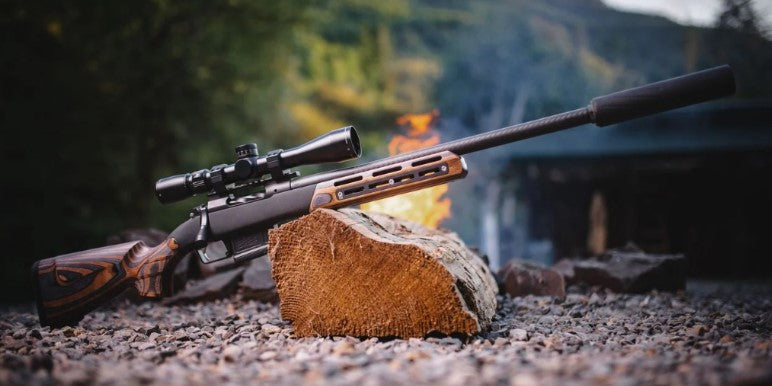
Elegante uses selected Claro American Walnut around an integrated aerospace-grade aluminum mini-chassis. The stock is listed at approximately 30 ounces, putting it firmly into the conversation around practical hunting-rifle weight rather than treating walnut as something reserved for heavy traditional builds.
The walnut remains the exterior surface the hunter handles, shoulders, and carries. The aluminum mini-chassis provides a defined internal support structure for the action. The design does not ask one material to perform every job simply because that is how rifle stocks were once built.
This is what The Future of Tradition means in practical terms: retain the material and geometry that continue to work, then use modern engineering where it improves the rifle.
Weight Matters, but Balance Matters Too
Hunters pay attention to ounces for good reason. A rifle that feels reasonable beside the truck can become much less reasonable after several hours of climbing or covering ground.
But the number on a scale does not tell the entire story.
A large optic, heavier barrel, suppressor, bipod, sling, and stock can shift the balance of a rifle considerably. Two rifles with similar overall weights may carry very differently depending on where that mass sits.
That is why asking whether wood or synthetic stock is lighter only gets you part of the answer. There are lightweight walnut stocks and substantial composite stocks. The finished design matters more than the category label.
For a hunting rifle, weight reduction should still preserve useful geometry and balance. Removing ounces only helps if the resulting rifle still carries and mounts the way the hunter expects.
Familiarity Is Part of Why Rifles Stay
There is a point where specifications stop being the main reason somebody prefers a rifle.
After years of use, the owner knows how it hangs from a sling, where the balance sits with the usual optic, and how the stock comes into the shoulder while wearing heavier hunting clothing. The support hand finds the same place without conscious thought.
That familiarity has practical value.
It does not mean old equipment should never be replaced. Barrels wear. Optics improve. Shooters change. A rifle may need to be reconfigured as the type of hunting changes.
But a rifle that has already proved comfortable, reliable, and well suited to its owner has an advantage that cannot be delivered in a new box. The next rifle has to earn that familiarity again.
If the rifle is eventually going to another owner, however, familiarity alone is not enough.
The next person needs to know what they have.
A Rifle Worth Handing Down Needs a Mechanical History
This is one of the least discussed parts of long-term rifle ownership.
If a rifle has been used, upgraded, or worked on for twenty or thirty years, important details can disappear when they live only in the owner's memory.
Keeping a basic record makes the rifle easier for the next owner to understand and maintain.
Useful information can include the exact action and model, chambering, stock inlet, barrel changes, magazine or bottom-metal configuration, optic and mount setup, significant gunsmithing work, replacement components, and any unusual hardware used in the build.
Where the manufacturer provides relevant installation or torque specifications, keeping those instructions with the rifle can also be useful.
Original parts that may matter later are worth labeling rather than dropping into an unidentified box on the workbench.
This is not about turning a hunting rifle into an archive project. It is simply mechanical continuity.
An inherited rifle accompanied by a clear record of what it is and what has been changed stands a better chance of remaining useful. A rifle full of undocumented modifications can become difficult to service even when the underlying equipment is still sound.
If we are serious about handing equipment down, the information should travel with it.
The Same Standard Applies to Knives and Axes
The principle extends to the smaller tools that return to hunting camp year after year.
A knife earns longevity because its blade can be maintained and because the owner becomes familiar with the work it does well. An axe earns it through appropriate head geometry, balance, a sound handle, and an edge that can be restored.
WOOX builds the Bad Boy Hunter and TERRA around the same idea of working materials first. The Bad Boy Hunter pairs D2 steel with American Walnut or Micarta handle options. The TERRA uses a machined 4140 steel head, differential heat treatment, a convex working edge, and American Walnut or Micarta handle configurations.
The materials matter, but the tool still has to perform its job. A knife has to cut. An axe has to chop when chopping work actually justifies carrying one.
Years of use may eventually give those tools a story, but usefulness is what keeps them coming back long enough for that to happen.
Price Doesn't Tell You Whether a Tool Will Still Make Sense in 20 Years
Expensive gear is not automatically lasting gear.
Price can reflect better materials, more machining time, additional handwork, or rarer walnut. Those things can absolutely matter, but they do not guarantee that the equipment will still make sense for its owner decades later.
For long-term ownership, some less glamorous questions become more important.
Can wear be inspected?
Can the relevant components be serviced?
Can normal maintenance be performed without replacing the entire object?
Are critical parts understandable and documented?
Does the underlying design solve a problem that is likely to remain relevant?
With a rifle stock, compatibility matters just as much as finish. Know the action, inlet, barrel profile, magazine or bottom-metal arrangement where applicable, and any hardware specific to the installation.
With natural materials, understand the maintenance they require. With steel tools, understand edge care and corrosion prevention. With replaceable components, know what they are before they become difficult to identify.
A product that remains understandable is much easier to keep working.
What to Look for When Buying Gear You Intend to Keep
Start with the job.
If it is a rifle, make sure the configuration fits how and where you hunt. If it is a stock, confirm compatibility before considering grade or appearance. If it is a knife, consider the blade, grip, steel, sheath, and the work you expect it to perform. If it is an axe, look at head geometry, handle length, balance, weight, and whether the tool solves a real problem in your field kit.
Then look at construction. Examine the parts that carry load and receive wear. Understand which components need maintenance and what happens when something eventually needs attention.
Natural materials should be chosen with their real characteristics in mind rather than treated as maintenance-free alternatives to synthetic materials.
Finally, consider whether the basic job is likely to remain useful. Hunting technology changes quickly in some areas and very slowly in others. Optics advance. Electronics change. A well-designed stock still has to fit the shooter. A knife still has to cut. An axe still has to put an appropriate edge into the work.
Equipment built around durable jobs has a better chance of remaining relevant.
A High Grade Stock Should Still Go Hunting
There is a natural temptation to protect rare material.
When a piece of walnut represents a small fraction of a harvest and cannot be visually duplicated, putting the first mark in it can feel significant.
But a stock is still a stock.
Good walnut deserves sensible care, but it does not need to be protected from the purpose for which it was shaped. A High Grade stock should still be carried, shouldered, and used like a working component of the rifle.
With enough seasons, marks are difficult to avoid. What matters is maintaining the stock correctly and dealing with genuine damage when it occurs.
The grain that made the blank unusual will still be there.
Years of use simply add another history to the material.
What Actually Makes a Rifle Worth Handing Down?
There is no single material or specification that creates an heirloom rifle.
The rifles that make it that far usually remain useful. They were constructed well enough to survive real use, somebody maintained them when maintenance was needed, and their owners understood how they were configured.
Natural materials can add another dimension because every piece begins differently. Walnut gives the rifle a grain pattern no other stock will share. High Grade adds another level of rarity to that material.
Modern engineering can help preserve the usefulness of those materials rather than competing with them. Elegante is one example: Claro American Walnut on the exterior, an aluminum mini-chassisinside, and a configuration built around the requirements of a modern hunting rifle.
For a rifle intended to last, that combination makes more sense than choosing between tradition and engineering as though only one can belong.
Frequently Asked Questions
What makes a hunting rifle worth handing down?
A rifle worth handing down usually combines good fit, sound construction, continued usefulness, maintainability, and a history that matters to its owner. Price and age alone do not make a rifle an heirloom. Keeping a clear record of its configuration and major modifications can also help the next owner maintain it correctly.
What information should stay with an heirloom rifle?
Useful records can include the firearm model and action, chambering, stock inlet, barrel changes, magazine or bottom-metal setup, significant gunsmithing work, major replacement parts, optic mounting information, and relevant manufacturer documentation. The goal is to help a future owner understand the rifle rather than guess at its configuration.
Is walnut suitable for a rifle that will be kept for decades?
Yes. Properly selected, finished, and maintained walnut can provide long service in a hunting rifle. It requires more attention around moisture than many polymer or composite materials, but normal surface wear can be maintained and a sound stock may be refinished when appropriate.
Does High Grade walnut improve accuracy?
No. WOOX High Grade refers to the selection and rarity of the walnut, including characteristics such as figure, grain, tone, density, balance, and overall material quality. Accuracy depends on the rifle system rather than the visual grade of the stock wood.
Why are walnut rifle stocks never exactly identical?
Walnut is a natural material. Grain direction, figure, color, contrast, and mineral character vary from blank to blank. Even when two stocks are machined to the same dimensions, their natural grain patterns remain different.
Can a lightweight hunting rifle use real walnut?
Yes. Stock weight depends on geometry, internal structure, hardware, and the amount of material used as well as the external material. The WOOX Elegante Sporter combines selected Claro American Walnut with an integrated aerospace-grade aluminum mini-chassis at a listed stock weight of approximately 30 ounces.
Should a valuable hunting rifle still be used?
A valuable rifle can remain working equipment if it is mechanically safe, appropriately maintained, and suitable for the intended hunt. Older firearms or rifles with uncertain mechanical condition should be properly evaluated before use. Sentimental or monetary value should never override safety.
What makes High Grade walnut rare?
Under WOOX’s own High Grade selection process, fewer than four percent of harvested walnut blanks qualify for the Grade Fancy category. Selection considers grain, figure, tone, density, balance, structural integrity, and the overall character of the individual blank.
Built to Be Handed Down
A manufacturer can select the wood, machine the parts accurately, pay attention to fit, and build equipment that remains understandable and maintainable years later.
What happens after that belongs to the owner.
A rifle gets carried through season after season. An optic changes. The stock gets maintained. A barrel may eventually be replaced. Somebody keeps enough information with the rifle that the next owner understands what was done and why.
Eventually the rifle carries more history than its original specification sheet ever could.
That is the kind of permanence WOOX builds for.
Built to be handed down to those who come next.