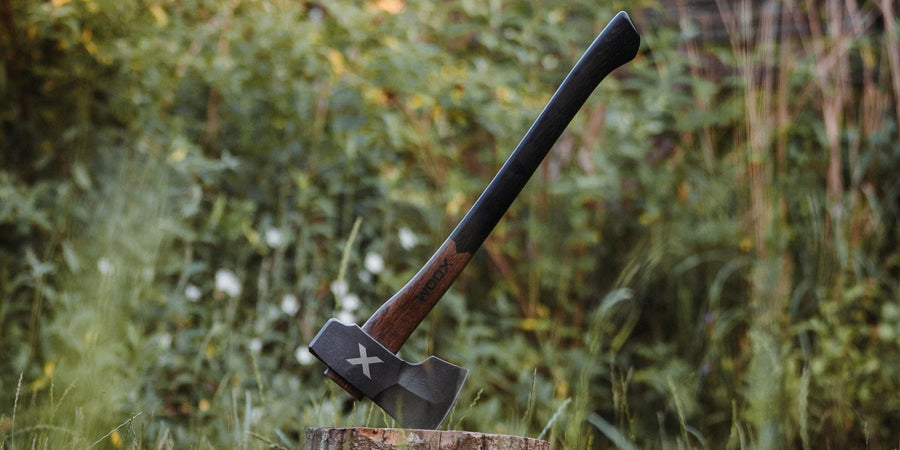
You pull an axe out of your hunting gear and find a patch of orange rust along the bit. It was clean when you packed it. Now the edge looks like it spent a season in a damp shed.
That can happen after a weekend of rain, a few cold nights at deer camp, or even a trip home with wet gear in the truck. Carbon steel doesn't need much encouragement to rust, particularly where chopping has worn through the original finish.
Fortunately, a little surface corrosion rarely calls for a full restoration. Most of the time, the job is straightforward. Clean the head, remove the rust from the affected area, and protect the exposed steel.
The part worth paying attention to is the finish. A bare vintage axe head, a black-coated hunting axe, and a stonewashed camp axe should not all receive the same treatment.
Here's how to remove rust from an axe head without doing unnecessary damage along the way.
The Best Way to Remove Surface Rust from an Axe Head
For light rust on exposed steel, start with a clean rag, a suitable maintenance oil, and a soft brush. If the corrosion remains, a mild abrasive may be appropriate, provided the steel's finish allows it.
There's no need to strip the entire head to deal with a few rusty spots.
1. Clean Off the Dirt Before Touching the Rust
Start with the axe secured on a stable workbench. Keep the cutting edge pointed away from your hands and use eye protection when brushing away rust or debris.
Wipe down the head, paying attention to the area behind the bit and around the eye.
Sap and dried dirt can conceal corrosion. They can also scratch the finish when rubbed across it. Remove those deposits first using a cleaner compatible with the head's finish.
Dry everything thoroughly before going further. A clean surface makes it much easier to see how much rust you're actually dealing with.

2. Look Closely at the Rust
Light surface rust usually appears as a thin orange film or small reddish patches. It may be concentrated along the exposed edge or around a scratch in the finish.
That is different from pitting.
Pitting leaves small cavities in the steel after the corrosion is removed. You can clean the rust out of those areas, but cleaning won't replace the metal that's already gone.
Check the cutting edge, cheeks, and eye carefully. If you see cracking, serious deformation, or substantial corrosion in a structurally important area, stop and have the axe inspected before using it.
On an older axe, also look at the existing patina. A dark gray or brown surface isn't necessarily active rust. There's no benefit in stripping a sound, established finish simply to expose bright steel underneath.
3. Work on the Rust, Not the Entire Head
Apply a small amount of suitable maintenance oil to the affected area and work it gently with a cloth or soft nylon brush.
For light surface corrosion, that may be enough.
If rust remains on bare steel, a fine abrasive can help. Use light pressure and keep the work confined to the affected area. Even fine steel wool or sandpaper can change the appearance of a coated, polished, or stonewashed surface.
WOOX's published instructions for the FORTE specifically recommend sandpaper or steel wool for removing rust, followed by wiping away the residue with an oiled cloth.
Those instructions are for the FORTE. They should not be treated as blanket approval to use abrasives on every axe finish.
If you're working on a vintage head with a maker's stamp, proceed especially carefully. Removing metal around an old marking is easy. Putting it back isn't an option.
4. Wipe It Down and Protect the Exposed Steel
Once the rust is gone, wipe away the remaining particles and cleaning residue.
Look over the head again under good light. Check for rust that may still be sitting around the edge of a worn finish.
Then apply a thin film of corrosion-preventive oil to the exposed steel, following the product and axe manufacturer's instructions.
You don't need a heavy coat. The purpose is to leave a protective barrier on the metal.
For longer storage, a compatible paste wax can also be useful. The U.S. Forest Service recognizes oil and paste wax as ways to protect axe heads from corrosion.
If you've used solvents or drying oils during maintenance, handle and dispose of the rags according to their safety instructions. Oil-soaked cloths, particularly those containing drying oils, can present a fire hazard if stored improperly.
Vinegar Will Remove Rust. It Can Remove the Finish, Too.
White vinegar has a place in axe restoration, particularly when someone is cleaning up an old, unfinished head with widespread corrosion.
But the fact that vinegar dissolves rust doesn't make soaking the best treatment for a modern hunting axe.
The acid can affect exposed steel and strip existing finishes. Leave a head in an acid bath too long, and you may end up with an uneven surface that needs further attention.
The U.S. Forest Service discusses vinegar soaking in its axe-restoration guidance. It also warns that the process removes the existing finish, leaving bare steel that needs immediate protection.
That's an important distinction.
An old, heavily rusted head being prepared for restoration is one thing. A finished axe with a few orange spots along the bit is another.
For the latter, localized cleaning is usually the more sensible starting point.
Avoid soaking an assembled axe without considering the effect on its handle and finish. When the goal is to preserve the original condition, aggressive chemical treatment can create more work than it saves.

Bare Steel, Black Finish, and Stonewash Need Different Care
There's a good reason to identify the material and finish before choosing a rust-removal method.
Take the WOOX FORTE.
Its head is made from tempered C60/1060 carbon steel, with black Mil-Spec and gray stonewashed finish options. The handle is Appalachian Hickory, fitted through a replaceable slip-fit arrangement.
Those details matter when the head needs attention.
Rust may appear where the working edge has exposed the underlying steel, even while the surrounding finish remains sound. In that situation, cleaning the rusted area without unnecessarily disturbing the rest of the head preserves more of the original protection.
The WOOX TERRA is a different construction. It uses machined 4140 alloy steel, with American Walnut and Micarta handle options.
4140 is not stainless steel. Exposed surfaces can corrode when moisture remains on them.
WOOX publishes routine cloth-cleaning instructions for TERRA, but its publicly available care guide does not specify the same abrasive rust-removal procedure used for FORTE.
If you encounter rust on a finished TERRA head, confirm the appropriate treatment with WOOX before reaching for sandpaper, steel wool, or chemical rust removers.
The type of steel matters. So does the finish applied to it.
And with either axe, cleaning the head is only part of the inspection. The handle and head attachment still need to be sound before the tool goes back into service.
Why Rust Shows Up After a Hunting Trip
Most hunters know better than to put away a wet rifle or leave a good knife sitting in a damp sheath. An axe deserves the same attention, particularly after several days in the field.
Consider what happens during a typical wet-weather hunt.
The axe gets used around camp, set down near damp firewood, and packed with the rest of the gear. Rainwater, mud, and wood sap remain on the head. After the drive home, it might stay in a gear tote for another week.
The exposed steel has plenty of opportunity to corrode.
Temperature changes add another complication. Cold metal brought into warmer, humid air can collect condensation, even when it was dry before the temperature changed.
Then there's the blade cover.
Leather is useful for protecting an edge during transport, but it can retain moisture. A damp leather cover left against carbon steel is poor long-term storage.
The WOOX TERRA comes with an Italian leather blade cover. After a wet trip, dry the cover separately and make sure the steel is clean and dry before storing the axe.
A leather cover protects against accidental contact with the edge. It doesn't replace the need to keep moisture off the steel.
A Better End-of-Trip Routine
A few minutes of attention after a hunt can prevent a much bigger cleaning job before the next one.
- Wipe off sap, mud, and other debris.
- Dry the head, including the exposed bit and areas near the eye.
- Inspect worn or scratched sections of the finish.
- Apply a light coating of suitable protection to exposed steel.
- Dry the leather cover separately before extended storage.
- Keep the axe in a dry, ventilated place rather than a damp gear bag.
For a wooden handle, follow the manufacturer's care guidance as well. Excessively dry conditions can cause wood to shrink, while repeated moisture exposure can damage the finish and affect its condition.
WOOX's FORTE instructions address Appalachian Hickory handle maintenance separately from cleaning the steel head.
An axe that's going to sit until next deer season deserves a proper inspection before you put it away.
When a Rusty Axe Needs More Than Cleaning
A little orange discoloration on the surface isn't the same as damage to the tool.
Deep pitting, visible cracks, serious deformation, or a compromised connection between the head and handle need closer attention.
Pay particular attention to corrosion around the eye and along the cutting edge.
Some older axes carry shallow pitting and remain serviceable after restoration. The presence of pits alone doesn't tell the entire story. Their depth, location, and effect on the remaining steel all matter.
There is also no reason to continue grinding or sanding simply because a stain remains. Aggressive cleaning removes metal, and it can obscure problems that would otherwise be visible.
If the head is cracked, substantially damaged, or no longer securely mounted, take it out of service until a qualified professional has assessed it.
Rust removal won't correct a loose head or repair a cracked handle.
Likewise, if the edge needs sharpening after cleaning, treat that as a separate maintenance job. WOOX covers the subject in Sharper Isn't Always Better: Understanding the Edge Requirements of Axes.
Frequently Asked Questions
Can You Remove Rust from an Axe Head Without Sanding?
Yes. Light surface rust may come away with suitable maintenance oil, a cloth, or a soft nylon brush.
For more persistent corrosion on exposed steel, a fine abrasive may be appropriate. The original finish determines how far you should go.
Does WD-40 Remove Rust from an Axe?
WD-40 Multi-Use Product can help loosen light surface rust and displace moisture. It can assist with cleaning, but it won't reverse pitting or repair corrosion damage.
Check its compatibility with the head's finish and follow the manufacturer's instructions. Apply appropriate long-term corrosion protection where needed.
Should You Remove the Patina from an Old Axe Head?
Usually not, unless the patina is concealing active corrosion or damage.
A stable darkened surface can remain on a working axe without affecting its usefulness. Removing it for appearance alone may erase part of the tool's original character.
Can a Stonewashed Axe Head Still Rust?
Yes. Stonewashing changes the surface appearance but does not make carbon or low-alloy steel immune to corrosion.
Exposed metal still needs appropriate care, especially after wet use.
How Often Should You Oil an Axe Head?
There's no single interval that suits every axe or storage environment.
Inspect exposed steel after wet outings and before extended storage. Reapply protection when the existing film has worn away or no longer provides adequate coverage.
Is a Rusty Axe Safe to Use?
Light surface corrosion does not necessarily make an axe unsafe.
What matters is the condition of the head, edge, handle, and attachment. Deep corrosion, cracks, significant damage, or a loose head require attention before use.
Before You Put the Axe Away
A hunting axe doesn't need to look untouched after years in the field. The finish may show wear, the handle may carry marks from camp work, and exposed steel may need occasional attention.
What matters is keeping corrosion under control without damaging the material you're trying to protect.
Clean the affected area, preserve the sound finish, and inspect the whole tool before returning it to service.
For model-specific instructions, WOOX maintains axe cleaning and care guidance covering the FORTE, TERRA, and other models.
A well-kept axe has no reason to retire simply because another hunting season has come and gone.