Most hunters misunderstand “drop-in” because they treat it as a promise that one stock will fit every rifle with the same model name.
That is not what drop-in means. A drop-in rifle stock is machined for a specific receiver footprint, action length, magazine system, bottom metal pattern, and barrel-channel configuration. When those details match the rifle, installation should not require bedding, inletting, stock sanding, or permanent modification.
When those details do not match, the stock is not a true drop-in match for that rifle.
That distinction explains why WOOX publishes compatibility by action and configuration rather than relying on rifle names alone. A rifle name gets the search started. Fitment details decide whether the stock belongs on the rifle.

Drop-In Means Matched Geometry, Not Universal Fit
The term drop-in describes how a compatible rifle installs into a stock. It does not mean the stock fits every rifle in the same product family.
A drop-in stock is machined so the receiver, recoil-lug or recoil-abutment surfaces, action screws, and magazine system align with their corresponding stock or chassis interfaces. That fit should come from the stock’s machined geometry, not from forcing the action into place.
Bedding compound, stock sanding, improvised hardware, or hand fitting may solve a problem on a custom build, but once those steps are required, the stock is no longer being used as a true drop-in fit for that rifle. Drop-in starts with the rifle matching the stock’s stated compatibility.
Mistake 1: Treating Drop-In as Universal Fitment
A drop-in stock is only drop-in for the rifle configuration it was machined to accept. Two rifles may share the same model family and still require different stock inlets.
A Remington 700 short action is not the same fitment as a Remington 700 long action. A Ruger American Gen I may not share the same fitment requirements as a Ruger American Gen II. A rifle with a hinged floorplate may not match a stock inlet built for a detachable magazine system.
The model name is not enough. The stock must match the receiver footprint, action length, magazine system, bottom metal, hand orientation, and barrel contour. WOOX follows this fitment-first approach by listing supported configurations for each stock and chassis rather than treating the rifle name as the full compatibility answer.
Mistake 2: Assuming the Rifle Name Is Enough
Many hunters identify a rifle as simply “Remington 700,” “Ruger American,” “Tikka T3x,” or “Howa 1500.” That is a starting point, not a final answer. Modern rifle families often include different action lengths, magazine systems, bottom metal patterns, generations, barrel profiles, and left-hand or right-hand versions. Those differences change the geometry the stock must support.
Before ordering any drop-in stock, confirm:
- receiver pattern
- action length
- magazine system
- bottom metal configuration
- barrel contour
- right-hand or left-hand action configuration
- rifle generation where applicable
- selected WOOX inlet or product-specific compatibility notes
These details determine fit. The roll mark on the receiver does not.
Mistake 3: Looking Only at the Barrel Instead of the Receiver
The receiver is the structural interface between the rifle and the stock. Its footprint determines the action inlet. That includes the recoil lug position, action screw spacing, tang profile, magazine opening, and receiver support surfaces. If those interfaces do not align, the action may not seat correctly regardless of how similar the rifle appears from the outside. That does not mean barrel details are unimportant.
The receiver determines whether the action fits the inlet. The barrel contour determines whether the barrel channel provides the intended clearance. Both must be checked.
A stock can match the receiver and still have the wrong barrel channel for the installed barrel profile.
Mistake 4: Assuming Every Heavy Barrel Needs Modification
A heavier barrel does not automatically mean the stock must be modified. Barrel clearance is part of stock design.
A free-floating barrel channel is machined for defined barrel profiles and maximum clearances. If the rifle’s barrel profile is supported by the selected stock and inlet, the barrel should generally have the intended clearance without stock sanding or opening the channel by hand. If the barrel is heavier than the stock’s supported profile, contact can occur.
That does not mean the stock was poorly made. It means the barrel profile and barrel channel do not match. Before modifying a stock, compare the installed barrel with the manufacturer’s published barrel-channel guidance for that exact stock and inlet.
WOOX publishes product-specific specifications and compatibility details because barrel clearance varies by stock, action, and intended use. For example, WOOX lists different maximum floating barrel guidance across chassis and stock models, with Furiosa Ultra built for a wider barrel-channel application than lighter hunting-oriented configurations.
The right answer is not to assume modification. The right answer is to confirm barrel profile before ordering.
Mistake 5: Ignoring the Magazine System
The magazine system is one of the most common reasons a stock does not fit as expected. A receiver may seat into the action inlet while the magazine system fails to align correctly.
That happens because the stock is not only machined around the receiver. It is also machined around the magazine opening, bottom metal, floorplate, or detachable magazine pattern the rifle uses. A stock intended for one magazine system should not be assumed to work with another.
Before ordering, confirm whether the rifle uses:
- hinged floorplate
- detachable box magazine
- AICS-pattern magazine
- factory magazine insert
- proprietary magazine system
- bottom metal supplied with the stock
- original bottom metal reused from the rifle
The stock, magazine system, and action screws all meet in the same area. If one part of that relationship is wrong, the rifle may not feed, lock, or assemble correctly.
Mistake 6: Forgetting Rifle Generation
Rifle generations matter. Manufacturers often keep a familiar model name while changing magazine systems, stock interfaces, bottom metal, trigger guards, or action details. That is why a stock listed for one generation should not automatically be assumed to fit another. Ruger American rifles are a clear example. Gen I and Gen II configurations can require different compatibility checks depending on the specific stock, magazine setup, and inlet.
The same principle applies across many rifle families. A current compatibility table is more reliable than memory, forum comments, or a model name alone.

Why Drop-In Depends on Manufacturing Precision
Drop-in fit begins before the rifle reaches the bench. It begins when the stock is machined around a defined receiver geometry.
The action inlet, recoil lug pocket, action screw alignment, magazine opening, and barrel channel are all cut to support a specific rifle configuration. That is why drop-in fit is not guesswork. It is precise.
A true drop-in stock succeeds because the structural interfaces are established during machining rather than corrected later with bedding compound, stock sanding, or hand fitting. For WOOX, that precision also depends on using the correct material for the correct role.
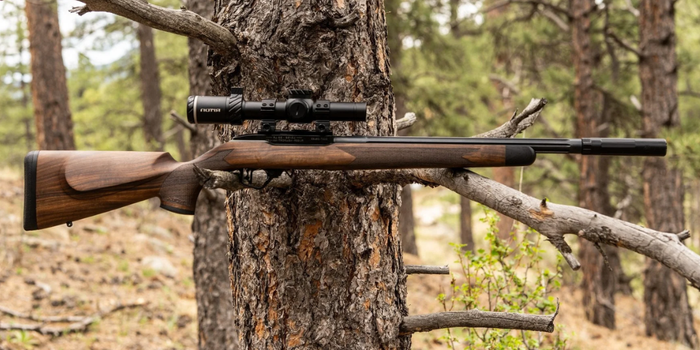
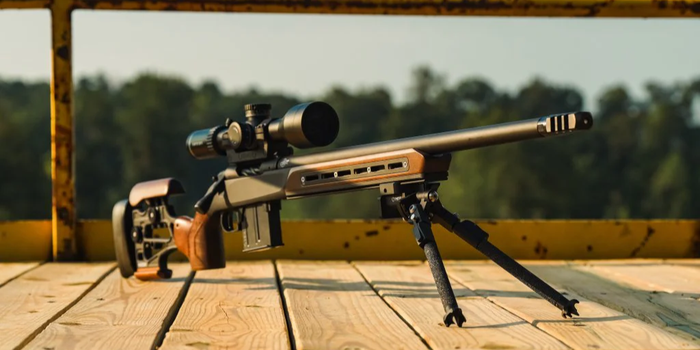
On chassis-based WOOX stocks, American Walnut forms the shooter-facing surfaces: the grip, comb, fore-end, and shoulder interface. The chassis provides the receiver-support structure beneath those contact surfaces.
On hunting stocks such as Elegante, WOOX uses a different internal support approach, pairing Claro American Walnut with an aerospace-grade aluminum mini-chassis. The construction changes by product. The principle does not. The shooter-facing surface and the receiver-support structure each have a job.
Drop-In Does Not Mean No Setup Required
A drop-in stock removes machining from installation. It does not remove precision from assembly. Correct installation still matters. Action screws must be tightened according to the manufacturer’s instructions for the stock, action, and hardware being used. A universal torque number should not be assumed across all rifles and stocks.
After installation, basic function checks should be completed before live fire.
Confirm:
- the firearm is unloaded before work begins
- the action seats fully in the inlet
- the recoil lug seats correctly in its pocket
- action screws are tightened according to the correct instructions
- the barrel has the intended clearance along the channel
- the bolt cycles freely
- the safety operates correctly
- With the firearm completely unloaded and pointed in a safe direction, perform the manufacturer-prescribed safety and function checks. Verify that the safety, trigger, bolt and magazine system operate correctly before live fire. When uncertain, have the installation inspected by a qualified gunsmith.
- the magazine locks, feeds, and releases correctly
- no hardware contacts moving parts
- sling, bipod, or rail accessories are secure if installed
A correctly engineered stock simplifies installation. It does not replace careful assembly.
Why Compatibility Tables Matter More Than Model Names
Compatibility tables exist because modern rifle families share names without always sharing dimensions. A rifle model name may include multiple action lengths, magazine systems, barrel profiles, bottom metal configurations, and generations. A compatibility table breaks that model name into the details that actually determine fit.
That is why WOOX guides customers toward action type, receiver pattern, magazine system, barrel profile, and selected inlet rather than asking only for the rifle name. The purpose is not to make stock selection harder. The purpose is to prevent a stock from being ordered for the wrong rifle configuration. A drop-in fit should be confirmed before the stock reaches the bench.
How to Read Drop-In Compatibility Before Ordering
Before buying a drop-in stock, read the compatibility details in this order. Start with the rifle family, then narrow the configuration. Confirm the action first. Then confirm the action length. Then confirm magazine system and bottom metal. Then confirm barrel profile and barrel-channel clearance. Then confirm hand orientation and generation.
Finally, confirm whether the selected stock uses supplied bottom metal, factory bottom metal, a magazine insert, or a specific detachable magazine pattern.
That order matters because each step can eliminate a stock that looked compatible by model name alone. A correct fitment decision should answer one clear question:
Does this specific stock inlet support this exact rifle configuration?
Drop-In Was Never Meant to Mean Universal
Drop-in was never meant to mean universal. It means the rifle installs without bedding, inletting, or permanent modification when the stock is selected for the correct receiver geometry and configuration. That is a narrower claim. It is also a better one.
A rifle stock should not fit because the installer forced the action into place.
It should fit because the action, magazine system, recoil lug pocket, barrel channel, and stock inlet were designed to meet. When those details match, installation becomes repeatable by design rather than successful by chance.
A drop-in rifle stock is defined by geometry, not speed. The receiver footprint, action length, magazine system, bottom metal, barrel contour, hand orientation, and rifle generation determine whether the stock is truly compatible. A model name starts the search. The compatibility table finishes it. For WOOX, that is the point of publishing specific fitment guidance: the stock should be selected for the rifle’s actual configuration, not for the name stamped on the action. Drop-in fit is not universal. It is exact.
FAQs
What does drop-in" mean for a rifle stock?
A drop-in rifle stock is machined for a specific receiver geometry and configuration so the rifle can be installed without bedding, inletting, or permanent modification. It is a fitment specification, not a guarantee that every rifle sharing the same model name will fit.
Does a drop-in rifle stock fit every rifle with the same model name?
No. Many rifle families include different action lengths, magazine systems, receiver patterns, barrel contours, hand orientations, and generations. Compatibility should always be confirmed using the manufacturer’s published fitment specifications.
What determines whether a rifle stock is truly compatible?
Compatibility depends on receiver footprint, action length, magazine system, bottom metal, barrel contour, hand orientation, and rifle generation where applicable. These details determine whether the action seats correctly within the stock.
Why is receiver geometry more important than barrel length?
Receiver geometry determines the action inlet. Features such as the recoil lug, action screw spacing, tang profile, magazine opening, and receiver support surfaces determine how the action is supported inside the stock. Barrel contour still matters because it determines whether the barrel channel provides the intended clearance.
Do heavy-barrel rifles always require stock modification?
No. Many stocks are machined with free-floating barrel channels that support specific barrel profiles. Always compare the barrel profile with the manufacturer’s published stock and inlet specifications before modifying the stock.
Does drop-in mean no gunsmithing is ever needed?
Not always. A true drop-in stock should not require bedding, inletting, or permanent stock modification when matched to the correct rifle configuration. However, careful installation, correct action screw torque, and post-installation function checks are still required.