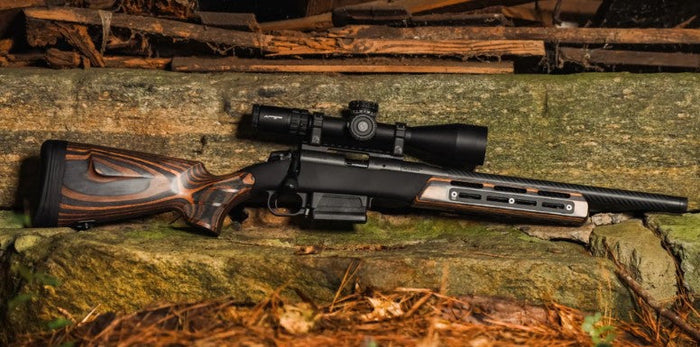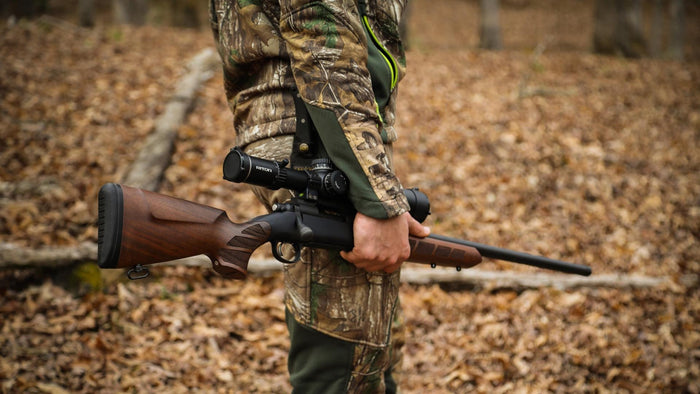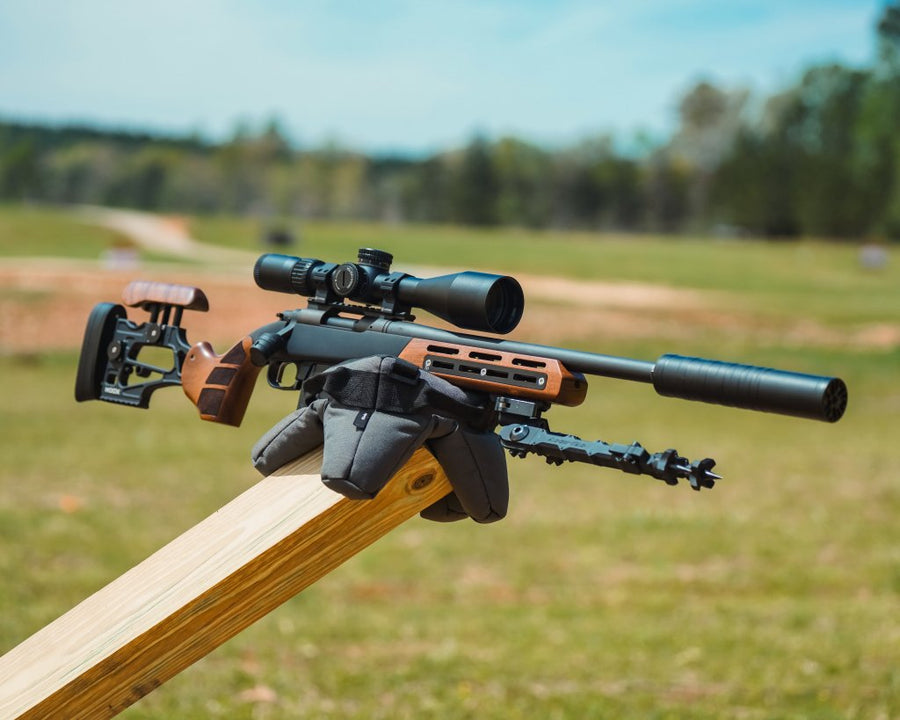
Top bolt release and bottom bolt release Savage 110 actions both allow the bolt to be removed for cleaning and maintenance, but the release location changes the clearance a replacement stock or chassis must provide.
Action length and barrel profile matter, but neither determines stock compatibility on its own. Bolt release location, action screw spacing, trigger housing geometry, magazine system, and bottom metal all influence whether a stock will fit correctly.
A stock or chassis must be machined with the correct clearance for the rifle's bolt release style, trigger housing, action length, magazine system, and bottom metal.
Confirming those details before ordering prevents inlet mismatches that should not be solved by torque, bedding pressure, or forced fitting. Correct inletting is the first engineering decision that determines whether every control continues to operate as designed.
The Bolt Release Does More Than Remove the Bolt
Savage has produced the Model 110 family in multiple generations, and the bolt release location is one of the details that helps identify which stock or chassis configuration may be required.
Savage 110 rifles are commonly discussed as top/side bolt release or bottom bolt release configurations.
A top or side bolt release places the release on the side or rear area of the action near the bolt handle. It can usually be operated without reaching into the trigger guard area.
A bottom bolt release places the release in the trigger-guard or lower receiver area, where the stock must provide the correct clearance around the trigger housing.
The receiver may still be part of the Savage 110 family, but the trigger housing, bolt release location, action screw spacing, magazine system, and bottom-metal configuration can change the stock requirements.
For stock selection, neither bolt release style should be treated as automatically better. The practical difference is the clearance and inlet geometry the stock or chassis must accommodate.
That difference becomes important when selecting a replacement stock or chassis.
Why Stock Inletting Changes
A rifle stock is not simply shaped around the outside of the action. Every internal surface locates the receiver, supports the action, or provides clearance for moving components.
The recoil lug must seat correctly, the action screws must bear against the intended support surfaces, and the trigger, safety, magazine components, and bolt release all require proper clearance.
The bolt release becomes one more control that determines the inlet dimensions.
Bottom bolt release actions require clearance around the trigger housing and lower-action area where the release mechanism operates. Top or side bolt release rifles place that function higher on the action, which can change the clearance needed around the trigger area.
A few millimeters of clearance can determine whether the bolt release, trigger, safety, and magazine components operate without interference.
A properly engineered stock supports the action consistently so the receiver, action screws, trigger clearance, bolt release, and barrel channel return to the intended relationship after installation.
Why "Savage 110" Is Not Enough
Many aftermarket stock searches begin with a simple phrase: Savage 110 stock.
That description leaves out several details that directly affect compatibility.
A replacement stock may also require confirmation of:
- short action or long action
- action screw spacing
- top/side or bottom bolt release
- barrel contour
- blind magazine, hinged floorplate, or detachable box magazine
- center-feed or stagger-feed magazine system on older rifles
- factory or aftermarket bottom metal
- trigger guard requirements
- selected WOOX Savage 110 stock inlet
Each specification can change the inlet dimensions, hardware, or installation requirements.
Treating every Savage 110 action as identical often leads to unnecessary fitting work, incompatible parts, or controls that do not operate cleanly after installation.
Engineering Integrity Starts With Correct Fit
A stock cannot make a rifle inherently more accurate, but it can help control one variable by supporting the action consistently each time the rifle is assembled.
When the action sits evenly against the intended support surfaces, the action screws clamp into the correct relationship, controls operate without interference, and the barrel maintains proper clearance within the barrel channel, the shooter begins with a more repeatable foundation.
A beautifully figured American Walnut stock that does not match the receiver geometry cannot deliver the fit the rifle requires.
Correct fit begins before the stock is ordered.
Why Walnut Machining Changes the Process
Every American Walnut blank differs in grain orientation, density, and figure. Those differences influence how the blank is supported during machining and how material is removed around critical internal geometry.
Every WOOX Savage 110 stock starts with a specific configuration, not the assumption that every Savage 110 action is interchangeable.
The internal geometry still has to match the receiver, action screw spacing, bolt release clearance, trigger housing, bottom metal, magazine system, and barrel profile while preserving the visual character that makes American Walnut worth selecting in the first place.
At WOOX, four generations of Minelli family walnut craftsmanship began in Bergamo on January 13, 1937, and continue today through finishing operations in Hickory, North Carolina. That lineage comes from understanding how American Walnut responds to decades of use, seasonal humidity, and changing temperatures, not from treating wood as decoration.
The grain is visible. The inlet geometry, receiver support surfaces, barrel channel, and control clearances determine how the stock serves the rifle over years of use.
WOOX Savage 110 Fitment Starts With Configuration
WOOX lists Savage 110 support by configuration and notes support for both top and bottom bolt release setups.
Before ordering, confirm the exact action length, bolt release style, barrel contour, magazine system, bottom metal, trigger guard requirement, and selected WOOX inlet.
WOOX support guidance also notes that Savage 110 short-action compatibility can depend on center-feed configuration and action screw spacing, while long-action configurations may require the correct detachable bottom metal or AICS-pattern setup depending on the selected stock and rifle configuration.
This is why the purchase decision should begin with the rifle on the bench, not only the model name.
Choosing the Correct Configuration Before Ordering
The bolt release style can usually be identified by inspecting the receiver and trigger area.
A release on the side or rear area of the action near the bolt handle indicates a top or side bolt release configuration.
A release in the trigger-guard or lower receiver area indicates a bottom bolt release configuration.
That single observation helps narrow compatibility, but it does not complete the fitment check. Action length, action screw spacing, barrel contour, magazine system, bottom metal, and trigger guard requirements still need confirmation.
WOOX identifies compatible Savage 110 configurations individually rather than treating every Savage 110 as the same platform.
The Better Question Is Compatibility
The discussion is often framed as choosing between top and bottom bolt release actions. In practice, neither system is automatically better for stock selection. The important question is whether your stock was engineered with the clearance your receiver requires.
Receiver geometry, action screw spacing, support surfaces, trigger clearance, barrel channel dimensions, magazine configuration, bottom metal, and bolt release location all contribute to that answer.
A replacement stock should fit the action because it was designed around the action, not because it can be modified until it works.
That distinction reflects whether the inlet was machined for a specific Savage 110 configuration or left for the installer to correct later.
For a rifle intended to remain in service for decades, correct fit becomes part of its long-term reliability. A stock built from American Walnut and selected for the correct Savage 110 configuration preserves the rifle's mechanical relationship and the permanence expected from an object built to be handed down to whoever comes next.
Frequently Asked Questions
Does a top bolt release and bottom bolt release Savage 110 use the same stock?
Not always. Some modern stocks and chassis are designed to accommodate both, while others require specific clearance for one bolt release style. Compatibility depends on the stock inlet, trigger housing clearance, action length, action screw spacing, magazine system, and bottom metal.
How do I identify a top bolt release or bottom bolt release Savage 110?
A top or side bolt release is located on the side or rear area of the action near the bolt handle. A bottom bolt release sits in the trigger guard or lower receiver area. Always confirm visually before ordering a replacement stock.
Which is better: top bolt release or bottom bolt release?
Neither design should be treated as automatically better for stock selection. The practical difference is the clearance and inlet geometry the stock or chassis must accommodate.
Can I modify a Savage 110 stock to fit a different bolt release?
Some stocks can be altered by a qualified gunsmith, but modifying the inlet may affect control clearance, receiver support, and overall fit. A stock selected for the correct Savage 110 configuration provides the cleaner foundation.
Why does bolt release location affect stock fit?
The bolt release mechanism changes the clearance needed around the trigger housing and receiver. Those differences require the stock or chassis to provide the right internal geometry so the trigger, safety, magazine components, and bolt release operate without interference.
What else should I check before buying a Savage 110 stock?
Confirm action length, action screw spacing, top/side or bottom bolt release, barrel contour, magazine system, bottom metal, trigger guard requirements, and the selected WOOX Savage 110 stock inlet. The name "Savage 110" alone is not enough for a reliable fitment decision.