




Savage 110 + WOOX Furiosa Chassis Review

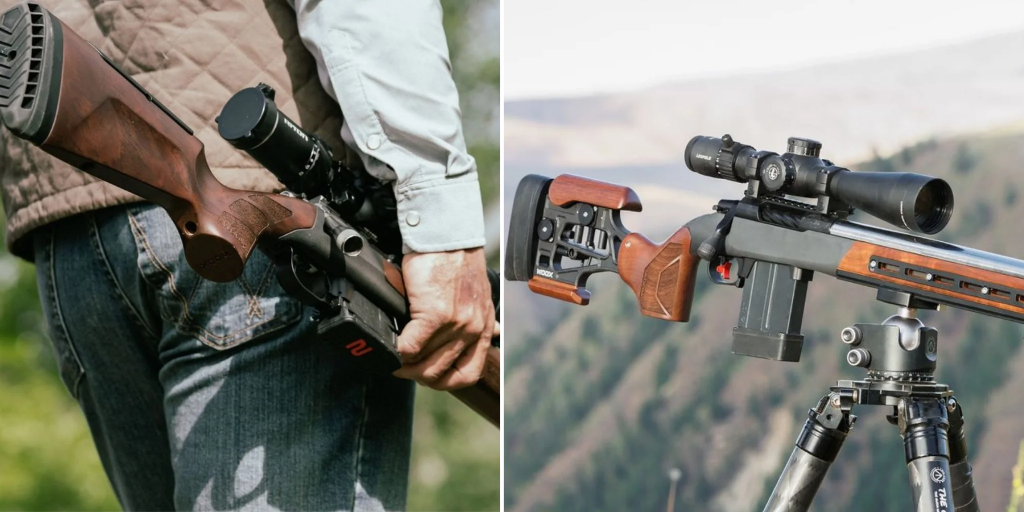
WOOX Furiosa with a walnut design: Explore all the specs and features on our official website
Why this build? To push the accuracy limits of the Savage 110 by upgrading from a polymer stock to a precision-engineered chassis.
Key components? WOOX Furiosa chassis, Savage 110 Hunter action in 6.5 Creedmoor, 24” barrel.
Who is it for? Long-range shooters and hunters seeking repeatable accuracy, classic looks, and modern ergonomics.
What do you gain? Improved shot consistency, better recoil management, and tool-free adjustability with a heritage feel.
The Vision Behind the Build
Every once in a while, a rifle build reminds you why craftsmanship matters. The Savage 110 Hunter is already known for out-of-the-box accuracy, but when paired with the WOOX Furiosa chassis, it evolves into something entirely different—a precision platform with soul.

This wasn’t a build for looks alone. It was about unlocking potential. The original Savage polymer stock, while serviceable, couldn’t deliver the rigidity or custom fit required for confident long-range shooting. Enter the Furiosa a hybrid masterpiece of walnut and 7075 aluminum that bridges tradition and technology. This was a build born out of curiosity, tested at distance, and reviewed with hundreds of rounds downrange.
Key Features and Technical Overview
The

The fore-end features aluminum M-LOK inserts at the 3, 6, and 9 o’clock positions, ready for accessories like bipods, monopods, or ammo holders. A full-length Picatinny rail is built into the toe of the stock—ideal for rear monopod support.
Every point of contact—fore-end, grip, cheek riser—is wood, and every adjustment is tool-free. Length of pull can be changed in seconds via a button-activated system. The cheek riser adjusts with a single press and locks firmly in place, ensuring perfect optic alignment every time.

Product Image
Component / Description

Image source: danieldefense
Chassis
WOOX Furiosa (Walnut + 7075 Aluminum)

Image source: Wooxteam
Rifle Action
Savage 110 Hunter in 6.5 Creedmoor

Image source: ar15discounts
Barrel
24" factory barrel

Image source: Wooxteam
Cheek Riser
Tool-free adjustable, walnut

Image source: kineticresearchgroup
LOP Adjustment
Button-controlled, no tools required

Image source: line-f.ru
M-LOK Slots
3, 6, 9 o’clock positions

Image source: shop.gohunt
Rear Support
Integrated Picatinny for monopod
Range Performance and Adjustability
Swapping the OEM stock for the Furiosa instantly revealed how much accuracy had been left on the table. Polymer stocks flex. Aluminum doesn’t. The result? Repeatable shots. At 880 yards, this rifle rang steel over and over with nothing more than a bipod, tripod, or backpack for support.
The cheek weld stayed consistent thanks to the adjustable comb, which allowed perfect eye alignment with the optic. Adjusting the length of pull took seconds—not minutes—and didn’t require a tool roll. That kind of on-the-fly versatility is a game-changer in the field.

Despite the 6.5 Creedmoor’s already mild recoil, the Furiosa's integrated recoil pad helped soak up what remained, turning follow-up shots into second-nature. And thanks to its robust construction, the rifle held zero even after long treks and rough handling.
Most importantly, it made the rifle feel like it was built for the shooter, not just another production piece. Whether running it from prone or locking it into a tripod, this chassis offered the shooter every possible advantage.

The WOOX Furiosa isn’t just an upgrade—it’s a transformation. It turns a reliable rifle into a personalized precision tool. For shooters who demand consistency, comfort, and character, there’s little else like it on the market.
Yes, it’s an investment. But it’s also a legacy piece. Built with pride, inspected by hand, and engineered for a lifetime of performance.
If your Savage 110 is shooting well, just wait until it’s wearing a Furiosa.

Keep Reading
AA vs AAA vs Exhibition Walnut: What Do Gunstock Grades Really Mean?
What do AA, AAA, Fancy and Exhibition walnut grades mean? Learn how gunstock grading differs, what makes walnut valuable, and why grain quality matters.
1911 Grip Fitment Guide: Colt, Kimber, Springfield, Ruger, SIG, Tisas & More
Learn how to choose 1911 grips that fit Colt, Kimber, Springfield, Ruger, SIG and Tisas pistols by checking frame size, safety, magwell and model compatibility

1911 Grip Compatibility Guide: Government, Commander, Officer, and Full-Size Grips Explained
Standard Government and Commander 1911s use full-size grips, while Officer models use compact grips. Check screw spacing, safety cuts, thickness and frame geometry before ordering.

What Is Checkering on a Gunstock? Patterns, Grip Texture and Lines Per Inch
What is gunstock checkering? Understand 18, 20 and 24 LPI, diamond patterns, hand-cut vs laser checkering, and what makes good grip texture.