M-LOK vs Picatinny on Firearm Furniture: Start With the Job, Not the Interface
M-LOK and Picatinny are often compared as if one system replaced the other. That is the wrong starting point.
A firearm does not need a mounting system because the system is popular. It needs a mounting system because a specific accessory has to sit in a specific place without interfering with carry, support, sling movement, hand placement, or how the firearm settles under use.
That is where M-LOK and Picatinny solve different problems.
Picatinny, also known as MIL-STD-1913 rail, gives the shooter a direct rail surface. M-LOK gives the shooter modular attachment without covering the furniture in unnecessary rail. One is not automatically better than the other. The useful question is where each interface belongs on the rifle or shotgun.
WOOX looks at mounting systems through the same lens as firearm furniture: what does the rifle or shotgun need to do in the field?
Picatinny makes sense where rail-mounted accessories need a direct, repeatable surface. M-LOK makes sense where the furniture needs to stay clean, lower profile, and adaptable around the shooter’s hand, sling, and support position.
The right interface is the one that supports the firearm’s actual use, not the one that sounds more modern.

M-LOK and Picatinny Are Mounting Interfaces, Not Accessories
Before choosing between M-LOK and Picatinny, it helps to separate the accessory from the interface. A sling is not M-LOK. A bipod is not Picatinny. A light is not automatically one system or the other.
M-LOK and Picatinny are the surfaces that allow those accessories to attach to firearm furniture.
Picatinny is a rail interface. A Picatinny accessory usually clamps directly onto the rail and uses the rail slots for positioning and resistance against fore-and-aft movement.
M-LOK is a modular slot system. An M-LOK accessory mounts through compatible slots using the correct M-LOK hardware. That distinction prevents many fitment mistakes.
A Picatinny bipod does not attach directly to a bare M-LOK slot. It needs a Picatinny rail surface, which may come from an M-LOK Picatinny rail section.
A QD sling swivel does not lock into an empty M-LOK slot. It needs a QD socket, either mounted directly to M-LOK or attached through a Picatinny adapter.
A rail-mounted light does not become M-LOK just because the handguard has M-LOK slots. The mount determines the interface. Mounting starts with the accessory and the furniture together.
What Picatinny Does Best
Picatinny is a standardized rail interface with cross slots that allow compatible accessories to clamp into place.
Its main advantage is direct compatibility with rail-mounted accessories. If the firearm furniture provides a Picatinny rail and the accessory is designed for Picatinny, the mounting path is usually straightforward. The accessory clamps to the rail, indexes against the slot, and sits on a known mounting surface.
That is why Picatinny remains useful on top rails, optic mounts, backup sights, some bipod systems, lights, and accessories that need a rail clamp.
Picatinny works especially well when:
- The accessory is built around a rail clamp
- The accessory may need to move between firearms
- A continuous rail surface is useful
- Repeatable position along the rail matters
- The accessory benefits from a raised, rigid mounting surface
This is why Picatinny is still common on receivers, top rails, and many firearm accessory surfaces. Optic mounts, sights, and many rail-mounted accessories already use that mounting language. The tradeoff is profile.
Picatinny rail adds raised edges, cross slots, and more surface area. That can be useful on top of the firearm, but it may feel bulky on areas where the support hand wraps the furniture or where the firearm moves against packs, clothing, brush, or sling webbing.
Picatinny is not outdated. It is best used where a rail surface is doing real work.
What M-LOK Does Best
M-LOK is a modular locking accessory system designed around slots rather than continuous rail. Its main advantage is controlled placement.
Instead of covering the handguard or fore-end with rail, M-LOK lets the shooter add an accessory mount only where it belongs. That can keep the furniture cleaner in the hand and reduce unnecessary rail where nothing is being mounted.
M-LOK works especially well when:
- The shooter wants a lower-profile handguard or fore-end
- The accessory can mount directly to M-LOK
- Only a short rail section is needed
- Hand placement matters
- Sling movement and carry position matter
- The builder wants modular placement without full-length rail
This matters on firearm furniture because the sides and bottom of a handguard or fore-end are often contact areas. They are where the support hand lands, where the firearm can contact gear, and where accessories can either help or get in the way.
M-LOK allows the shooter to place a light, hand stop, QD socket, bipod adapter, barricade stop, or short rail section where it supports the way the firearm is used. It also avoids adding rail where the firearm does not need rail. That is its advantage.
Why Many Firearm Furniture Systems Use Both
The most useful furniture layouts often use both systems. Picatinny belongs where a rail surface makes mechanical sense. M-LOK belongs where modularity and cleaner handling matter.
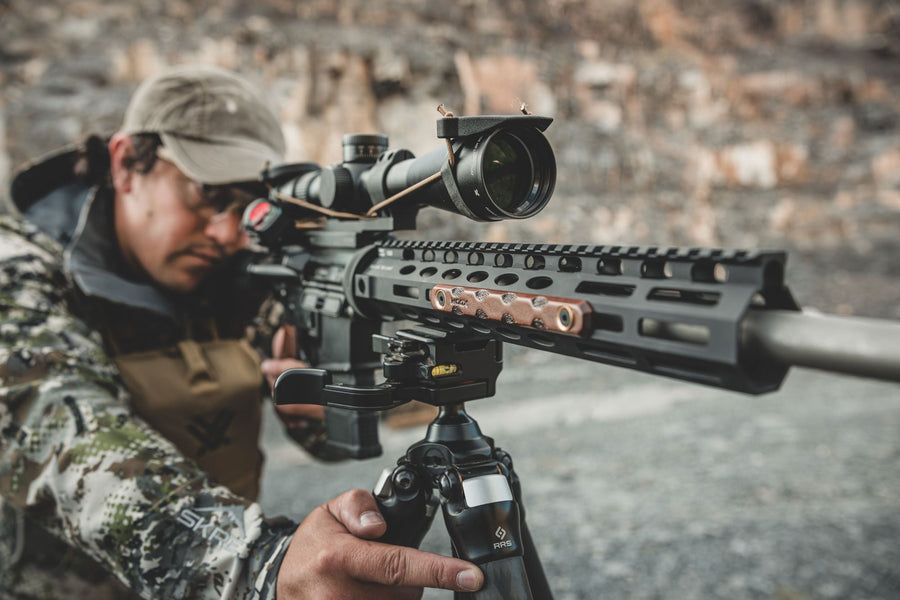
That is why many modern handguards use Picatinny along the top and M-LOK along the sides or bottom. The top rail can provide a direct surface for sights or rail-mounted accessories, while primary optics should be mounted only to the correct receiver or rail surface specified for the firearm and optic system. The M-LOK slots allow accessory placement without forcing rail across every hand-contact surface.
This is not a compromise. It is a layout decision. A firearm can benefit from Picatinny where a rail is needed and M-LOK where rail would only add bulk.
WOOX follows this practical logic in firearm furniture such as the Vigilante Handguard, where M-LOK attachment points and Picatinny rail space work together to support accessory placement. The purpose is not to choose one interface for every job. The purpose is to put the right interface where it serves the firearm’s job.

Accessory-by-Accessory Guide
The cleanest way to choose between M-LOK and Picatinny is to start with the accessory. Ask what the accessory needs, where it needs to sit, and how it affects the rifle or shotgun in use.
Bipods
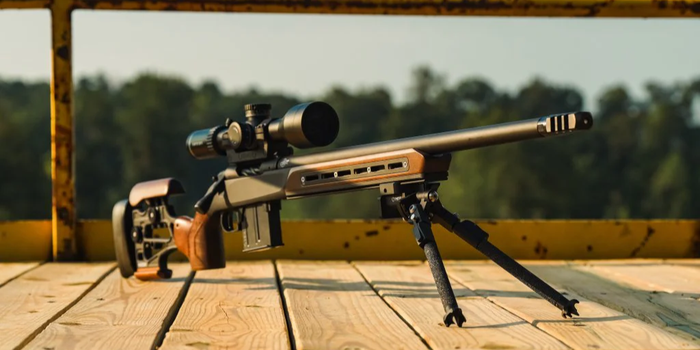
Bipods can use either system depending on the mount. A Picatinny bipod needs a Picatinny rail or rail section. This can be useful for shooters who move the same bipod between rifles or prefer a clamp-on rail interface.
An M-LOK bipod adapter can mount more directly to M-LOK furniture, often reducing unnecessary rail length on the bottom of the handguard or fore-end.
For supported shooting, the important issue is not only the interface. It is whether the bipod mounts securely, sits in the right position, clears the barrel or magazine tube area, and supports the rifle predictably from that position.
A precision-focused rifle may tolerate more rail and hardware if the bipod interface is stable. A hunting rifle carried in the field may benefit from a cleaner bottom profile and only the mount required for the bipod being used.
Sling Mounts and QD Cups
Sling mounting is one of the most common places where interface confusion causes mistakes. A QD sling swivel does not attach directly to an empty M-LOK slot. It needs a QD socket.
That socket may be an M-LOK QD socket mounted into an M-LOK slot, or it may be a Picatinny-mounted QD adapter attached to a rail. The interface holds the socket. The socket holds the sling swivel.
Placement matters as much as the mounting system. A sling point can change how the rifle carries, how the muzzle hangs, how the stock rides against the body, and how quickly the shooter can build a supported position.
The best sling mount is the one that works with the furniture, the shooter’s carry method, and the firearm’s balance.
Lights
Lights can be Picatinny-mounted, M-LOK-mounted, or attached through purpose-built light mounts. Picatinny is often useful when the light or mount already uses a rail clamp, or when the shooter wants to move the light between firearms with rail sections.
M-LOK can be useful when the shooter wants the light positioned closer to the handguard or placed at a specific angle without carrying extra rail across the furniture.
The deciding factors are activation, support-hand placement, clearance, and sling movement.
A light should not force the hand into an awkward position. It should not interfere with the sling. It should not sit where recoil, heat, barrel clearance, or magazine-tube geometry creates a problem.
The right mount is the one that puts the light where it can be used without fighting the firearm’s handling.
Hand Stops and Barricade Stops
Hand stops and barricade stops are small accessories, but placement matters. An M-LOK hand stop can be positioned exactly where the support hand indexes naturally. This can help repeat the same hand placement without adding a long rail section.
A Picatinny hand stop or barricade stop works well when the accessory is rail-based or when the rifle already has a rail section in the correct position. The wrong location can be worse than no accessory at all. If the stop forces the hand too far forward, too far back, or into a position that interferes with support, it works against the rifle instead of supporting it.
Optics and Sights
Picatinny remains the common interface for many optics, mounts, and backup sights. Primary optics should be mounted to the correct receiver or rail surface specified for the firearm and optic system. M-LOK is not the interface for mounting a primary rifle optic.
This distinction matters. M-LOK belongs on handguards, fore-ends, and accessory surfaces. Picatinny remains the better-known interface for many sighting systems and optic mounts because it provides a standardized rail surface designed for that type of accessory.
For optics, the question is not M-LOK versus Picatinny. The question is whether the firearm has the correct rail, mount, eye relief, height, torque specification, and receiver support for the optic being installed.
Rail Covers and Grip Surfaces
Both systems can affect how the firearm feels in the hand. Picatinny rail covers can make a rail more comfortable and reduce sharp edges against the support hand.
M-LOK covers can fill unused slots, improve hand feel, and help manage contact with the handguard or fore-end.
This is where furniture design matters. The shooter’s hand is part of the rifle system. If the mounting surface is uncomfortable, too bulky, too sharp, or badly placed, the rifle may feel less natural to carry, support, or control consistently.
When to Use an M-LOK Picatinny Rail Section
An M-LOK Picatinny rail section is useful when the firearm furniture has M-LOK slots but the accessory needs a Picatinny rail. Use one when the accessory is Picatinny-only.
That may include some bipods, sling adapters, lights, hand stops, or barricade stops.
The rail section should be long enough to support the accessory properly, but not longer than necessary. Adding rail only where it is needed is part of the point of M-LOK furniture.
Installation still matters. M-LOK hardware must be compatible with the slot, installed in the correct orientation, and tightened according to the accessory maker’s instructions.
If the accessory or rail section does not seat correctly, do not force the hardware; confirm slot clearance, fastener length, and manufacturer instructions before field use.
There also needs to be enough clearance behind the slot for the hardware to seat correctly.
Not every slot location is automatically usable for every accessory. Barrel profile, gas block clearance, magazine tube location, heat shields, internal handguard geometry, and fastener length can all affect fit.
What to Confirm Before Mounting Accessories
Before installing any accessory, confirm the full setup.
Check:
- Firearm platform
- Furniture model
- Mounting interface
- Accessory mounting type
- Hardware compatibility
- Clearance behind M-LOK slots
- Picatinny rail length and position
- Barrel, gas block, magazine tube, or heat-shield clearance
- Sling movement
- Support-hand placement
- Local and federal legal requirements for the firearm configuration
The accessory should serve the firearm’s use. It should not create a new handling problem.
A mounting system is only useful when the accessory is installed in the right place, with the right hardware, for the way the firearm is actually carried, supported, and used.
WOOX Fitment Logic: Start With the Furniture
WOOX firearm furniture is built around how the rifle or shotgun is carried, supported, and used.
That is why mounting decisions should start with the furniture, not the accessory catalog.
Before adding a light, sling point, bipod, or hand stop, look at the firearm’s working geometry. Where does the support hand land? Where does the sling need to move? Where does the firearm contact a rest, barricade, blind rail, pack, or shooting bag? Where does extra rail help, and where does it only add bulk?
Picatinny and M-LOK both have a place. Picatinny gives a direct rail surface where rail-mounted accessories make sense.
M-LOK keeps the furniture modular and cleaner where the shooter needs controlled placement without unnecessary rail. The WOOX approach is not about adding hardware for the sake of hardware.
It is about placing the right interface where it supports the firearm’s job.
M-LOK and Picatinny are not rivals in every setup. Picatinny is best when a direct rail surface is needed. M-LOK is best when modular attachment, lower profile, and controlled accessory placement matter. The most useful firearm furniture often uses both.
The right choice depends on the accessory, the mounting location, the firearm’s geometry, and the way the rifle or shotgun will be carried, supported, and used.
FAQ
Is M-LOK better than Picatinny?
Not always. M-LOK is often useful for lower-profile modular mounting, while Picatinny is useful when an accessory is designed to clamp directly to a rail. The better choice depends on the accessory, mounting location, and firearm furniture.
Is Picatinny outdated?
No. Picatinny remains useful for optics, sights, bipods, lights, sling adapters, and other accessories designed around a rail clamp. It is best used where a rail surface is actually needed.
Can Picatinny accessories attach to M-LOK?
Not directly. A Picatinny accessory usually needs a Picatinny rail surface. If the firearm furniture has M-LOK slots, an M-LOK Picatinny rail section can be installed first.
Can a QD sling swivel attach directly to M-LOK?
No. A QD sling swivel needs a QD socket. The socket may mount directly to M-LOK or attach through a Picatinny adapter, but the swivel does not lock into an empty M-LOK slot by itself.
Why do some handguards have Picatinny on top and M-LOK on the sides?
The top Picatinny rail provides a direct rail surface for sights or rail-mounted accessories. Primary optics should be mounted only to the correct receiver or rail surface specified for the firearm and optic system. M-LOK on the sides and bottom keeps the furniture lower profile while allowing modular accessory placement.
Is M-LOK lighter than Picatinny?
M-LOK can reduce unnecessary rail coverage because rail is added only where needed. Final weight still depends on the furniture design, accessory hardware, rail sections, and firearm configuration.
Which mounting system is better for a bipod?
It depends on the bipod mount. A Picatinny bipod needs a Picatinny rail or rail section. An M-LOK bipod adapter can mount more directly to M-LOK furniture. The better choice depends on the rifle’s role, support position, and whether the bipod needs to move between firearms.
What should I check before installing M-LOK accessories?
Confirm hardware compatibility, slot clearance, correct fastener length, accessory orientation, and any barrel, gas block, magazine tube, or heat-shield clearance issues. Follow the accessory manufacturer’s installation instructions.