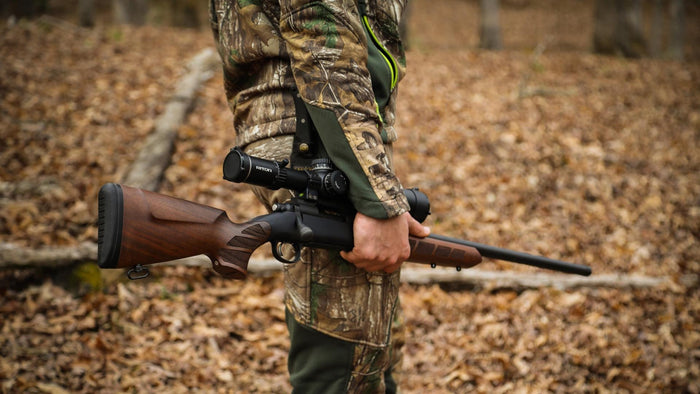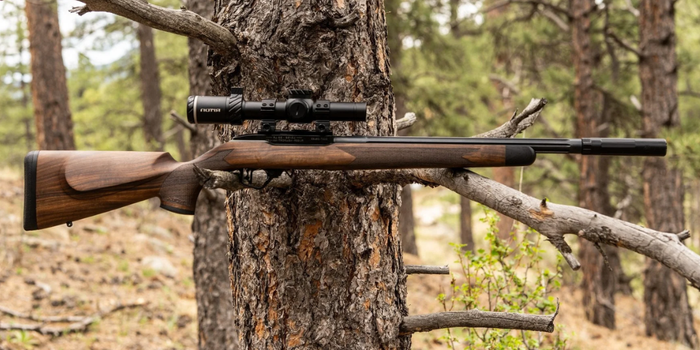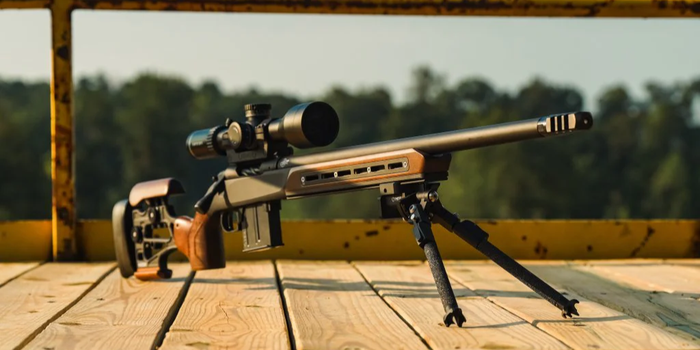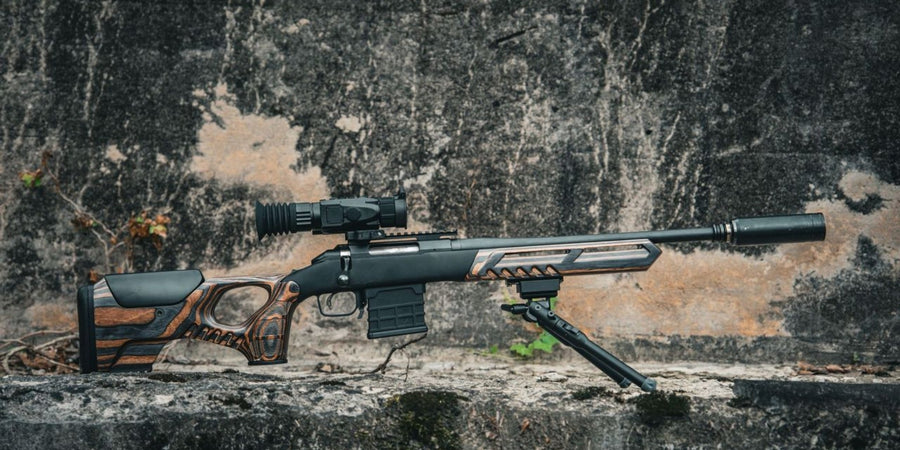
Most discussions about rifle stocks begin with weight, barrel clearance, action compatibility, or accessory mounting. Those specifications matter because they determine whether a stock fits the rifle. They do not fully explain how the rifle fits the shooter. Those four contact points shape trigger control, rifle balance, optic alignment, and recoil management.
In this article, the term "contact patch" refers to the four primary areas where the shooter interfaces with the rifle stock: the firing hand, support hand, cheek, and shoulder.
The contact patch does not make a rifle accurate by itself. It determines how consistently the shooter returns to the rifle.
A Rifle Stock Is the Shooter’s Mechanical Interface
The stock is the rifle component the shooter contacts through the entire firing sequence. The barrel, action, optic, and trigger all matter mechanically. The stock determines how the shooter meets those components.
Grip circumference, wrist angle, comb height, fore-end profile, toe line, and length of pull are not just comfort details. They are geometry decisions. They determine whether the shooter returns to the same position every time the rifle is mounted.
A stock that fits the action but does not fit the shooter still leaves inconsistency in the system. The firing hand may shift before the trigger breaks. The cheek may land in a different place behind the optic. The support hand may fight the rifle’s balance. The shoulder may absorb recoil differently from shot to shot.
That is why WOOX approaches a rifle stock as an interface, not decoration. American Walnut creates the shooter-facing contact surfaces: the grip, comb, fore-end, and shoulder interface.
On chassis-based WOOX stocks such as Furiosa Ultra and Cobra, the AA 7075 aircraft-grade aluminum chassis provides the receiver-support structure beneath those contact surfaces. Each material has a role. The walnut is where the shooter meets the rifle. The chassis is where the action is supported.

The Four Primary Contact Points
Every rifle stock connects shooter and rifle through four primary contact areas. Each contact point performs a different job.
Changing one contact point affects the others. A taller optic can change cheek weld. A longer length of pull can change trigger reach. A wider fore-end can change support-hand position. A different grip angle can change wrist alignment. The contact patch works as a system.
1. The Firing Hand: Controlling the Trigger Without Steering the Rifle
The firing hand does two things at once. It stabilizes the rifle, and it moves the trigger.
Those two jobs can interfere with each other when grip geometry does not match the shooter. A grip that is too large, too small, too vertical, or too swept for the shooter’s hand can change wrist position and trigger finger placement. When the hand has to search for position, the trigger finger may add side pressure instead of moving cleanly to the rear.
Good grip geometry gives the firing hand a defined place to return to. The goal is not to squeeze the rifle harder. The goal is to let the trigger finger move without steering the rifle.
On precision-oriented WOOX platforms such as Furiosa Ultra and Cobra, grip geometry is designed around a more controlled firing-hand position. The chassis provides structural support around the action, while the stock geometry gives the firing hand a repeatable contact point.
2. The Support Hand: Managing Balance Before the Shot Breaks
The support hand manages balance before the shot. Its position changes depending on how the rifle is used.
A hunter carrying through timber may keep the support hand close to the rifle’s balance point. A shooter working from a bipod, bag, barricade, or tripod may move the support hand farther forward or use it to load the rifle into support. That means fore-end geometry has to be judged by use case.
A narrow fore-end often carries well in the hand. A wider or flatter fore-end may settle more predictably on a bag, barricade, or rest. A long fore-end can provide more accessory and support options, but it can also change how the rifle carries. The fore-end is not just an accessory surface. It is part of the contact patch. It determines where the support hand meets the rifle and how the rifle settles before the trigger is pressed.
3. The Cheek Weld: Aligning the Eye Behind the Optic
The cheek weld controls eye position. Every rifle mount should bring the shooter’s eye back to the same place behind the optic.
When cheek weld changes, sight alignment changes. The shooter may lift the head, press harder into the stock, roll the face sideways, or search for the center of the optic. Those corrections add inconsistency before the shot breaks.
Comb height establishes vertical eye alignment. Comb width affects how the face settles against the stock. Comb length affects how much cheek contact remains stable through the mount and recoil cycle. Together, those dimensions create the reference point between the shooter’s eye and the optic. Different optic heights can require different cheek positions.
This is why adjustable cheek risers matter on precision-focused stocks such as Furiosa Ultra and Cobra. Once adjusted for the optic height and shooting position, the cheek riser helps the shooter establish a repeatable reference point. The cheek weld is not a soft detail. It is the contact point that links the shooter’s eye to the sighting system.
4. The Shoulder Pocket: Managing the Rifle Through Recoil
The shoulder contact point determines how the rifle comes into the body. Length of pull, recoil pad position, toe line, and buttstock geometry all affect that relationship. A stock that is too short can compress the shooter behind the rifle and increase unnecessary muscle tension.
A stock that is too long can force the shoulder, neck, and firing hand out of position. Both conditions affect the rest of the contact patch.
Shoulder position changes cheek weld. Cheek weld changes eye alignment. Firing-hand position changes trigger reach. Trigger reach changes trigger control.
Correct length of pull helps keep shoulder contact, cheek weld, firing-hand position, and optic alignment in the same relationship during recoil. Adjustable length of pull can help the stock account for different body dimensions, seasonal clothing, and shooting positions. The goal is not simply comfort. The goal is repeatable contact.
The Contact Patch Is a Complete System
The four contact points do not work separately. The firing hand, support hand, cheek, and shoulder all influence each other.
A rifle can have a good grip but poor cheek alignment. It can have a stable fore-end but the wrong length of pull. It can fit the action correctly but still force the shooter into a weak firing position. That is why the contact patch should be evaluated as a system.
A shooter should be able to mount the rifle and return to the same hand position, cheek position, shoulder contact, and sight picture without rebuilding the position every time. If one contact point changes, the others should be checked.
Where WOOX Material Choices Fit In
WOOX does not treat wood as decoration wrapped around metal. The material choice has to serve the rifle and the shooter.
American Walnut forms the surfaces the shooter touches, carries, shoulders, and controls. It gives the rifle its hand-facing geometry: grip, comb, fore-end, and shoulder contact. On chassis-based WOOX stocks such as Furiosa Ultra and Cobra, the AA 7075 aircraft-grade aluminum chassis provides the receiver-support structure beneath that exterior interface.
The two materials do different jobs. The walnut belongs to the shooter’s contact patch. The chassis belongs to the action-support system.
That separation matters because the shooter and the receiver do not need the same material response. The shooter needs defined, repeatable contact surfaces. The action needs a support structure machined for the receiver, recoil lug interface, and stock geometry. This is where WOOX’s wood-and-metal approach earns its place. Not as ornament. As a division of labor.
Contact Patch Checks Before Judging a Stock
Before judging whether a stock fits, evaluate the contact patch with the unloaded rifle. Confirm the firearm is unloaded, visually inspect the chamber, and keep ammunition away from the fit-check area. Then mount the rifle naturally from the positions where it will actually be used. Check the firing hand first.
The hand should return to the same place without sliding, over-gripping, or rotating the wrist to reach the trigger. The trigger finger should reach the trigger without pulling the rifle sideways. Check the support hand next.
The fore-end should allow the rifle to balance in the intended position. A hunting rifle should carry naturally. A supported rifle should settle predictably on a bag, bipod, barricade, or field rest. Then check cheek weld.
The eye should arrive behind the optic without the shooter lifting the head, rolling the cheek, or searching for the sight picture. Finally, check shoulder contact. The buttstock should seat in the shoulder pocket without forcing the neck, firing arm, or head out of alignment.
If one contact point feels wrong, check the others. The issue may not be isolated to the place where it first appears.
Built Around the Place the Shooter Meets the Rifle
Since Francesco Minelli opened his workshop in Bergamo on January 13, 1937, the Minelli family has treated walnut as a working material, not decoration. In a WOOX rifle stock, that material becomes part of the shooter’s contact patch.
The grip, comb, fore-end, and shoulder interface are not secondary surfaces. They are where the rifle becomes usable in the hands of the shooter. On chassis-based stocks, the aluminum structure supports the receiver while the walnut carries the human interface. That is the point of the contact patch. It is where engineering becomes physical.
Every time the rifle is mounted, carried, steadied, fired, or handed to the next generation, the relationship between shooter and rifle begins where the rifle actually meets the body.
A rifle stock contact patch is the complete set of surfaces where the shooter meets the rifle. The firing hand controls trigger input. The support hand manages balance and position. The cheek establishes eye alignment. The shoulder manages body contact and recoil relationship. Those contact points do not control accuracy by themselves.
They shape whether the shooter can return to the rifle the same way from one mount to the next. That is why stock geometry matters. A rifle stock should not be judged only by what action it accepts or what accessories it carries. It should be judged by how the shooter meets it.
FAQs
What is the contact patch on a rifle stock?
The contact patch is the complete set of surfaces where the rifle stock meets the shooter: the firing hand, support hand, cheek, and shoulder. These four contact points influence trigger input, recoil management, sight alignment, and repeatable rifle mount.
Why does rifle stock fit matter?
Rifle stock fit matters because it affects how consistently the shooter returns to the same position. A stock that fits the shooter helps support repeatable hand placement, cheek weld, shoulder contact, and optic alignment.
How does grip geometry affect rifle control?
Grip geometry affects wrist angle, trigger finger placement, and firing-hand pressure. A grip that naturally positions the hand can help the trigger finger move without steering the rifle.
Does cheek weld affect optic alignment?
Yes. Cheek weld affects where the shooter’s eye sits behind the optic. Comb height, comb width, and cheek contact all influence whether the shooter returns to the same sight picture each time the rifle is mounted.
Why is length of pull important?
Length of pull affects the relationship between the shoulder, cheek, firing hand, and optic. A stock that is too short or too long can change shoulder contact, trigger reach, cheek weld, and eye alignment.
Does the rifle stock contact patch control accuracy?
No. The contact patch does not control mechanical accuracy by itself. It shapes how consistently the shooter contacts the rifle, which can influence trigger input, sight alignment, recoil management, and repeatable shooting position.