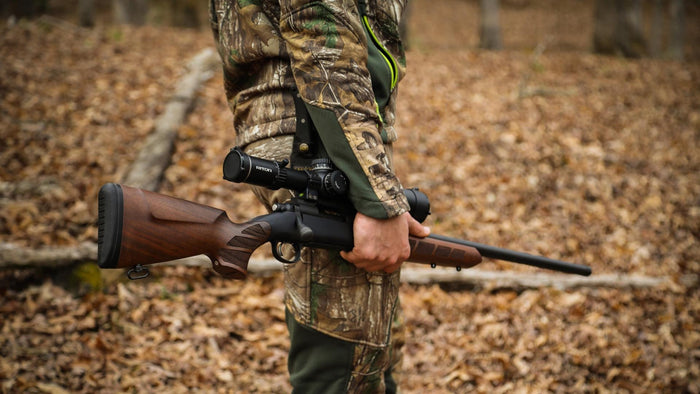
A hunting rifle may spend hours in the support hand before it ever rests on a shooting support. That makes forend geometry more than a visual detail.
The forend is one of the rifle’s main contact points with the shooter and the field. It determines how the support hand closes around the stock during carry, how the rifle balances through uneven terrain, and how the underside of the stock settles on a pack, bag, rail, branch, or other field rest. A slim forend and a wide forend may fit the same action, barrel, and optic, yet they change how the rifle carries and how it rests. Those differences make forend width an engineering decision, not a cosmetic one.
The Forend Does Two Different Jobs
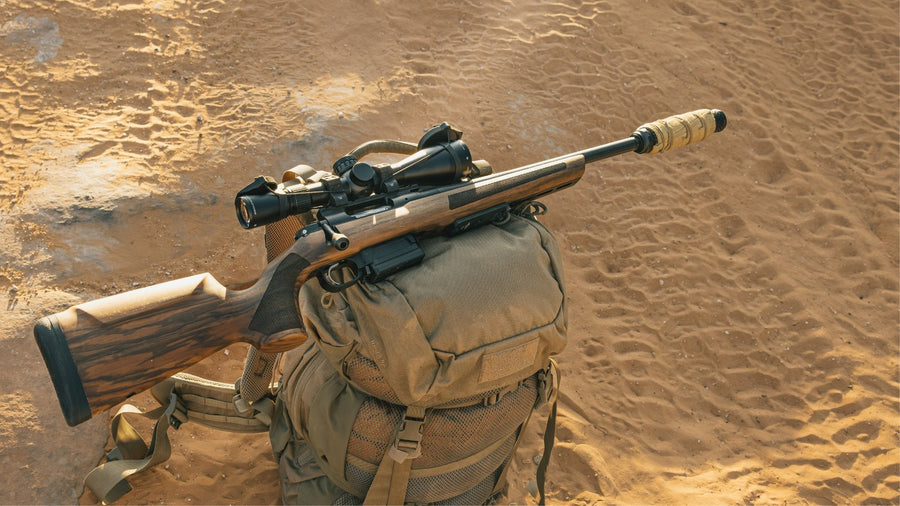
During the hunt, the forend serves two roles. First, it is the primary interface for the support hand while the rifle is carried. Second, it becomes the rifle’s contact surface when the shot is built from a backpack, shooting sticks, blind rail, fallen log, tripod, bag, or natural terrain. Those two jobs do not always ask for the same shape. A forend built only for carry may feel excellent in the hand but provide limited contact on a field rest.
A forend built only for supported shooting may feel stable on a bag but bulky during long periods of carry. That is why many hunting stocks are not uniformly slim or uniformly wide. They are shaped to let the support hand close naturally around the stock while still giving the underside enough surface to settle on support. The best geometry depends on how the rifle will actually be used.

Why Slim Forends Feel Easier to Carry
Slim forends often feel easier to carry even when the rifle’s measured weight has not changed. That difference comes from hand geometry.
A slimmer profile allows the support hand to close more naturally around the stock. The hand does not need to stay as open, and the fingers do not have to work as hard to maintain control. Over a long hunt, that matters.
A rifle carried for hours across timber, ridges, fields, or steep ground should not force the support hand into constant tension. A slim forend can also make the rifle feel faster from carry to shoulder because the support hand reaches a secure position with less adjustment. That does not make slim forends universally better. It means they solve a specific hunting problem: long-duration carry with less grip fatigue and a more natural hand position.
Why Wider Forends Can Create More Stable Rest Contact
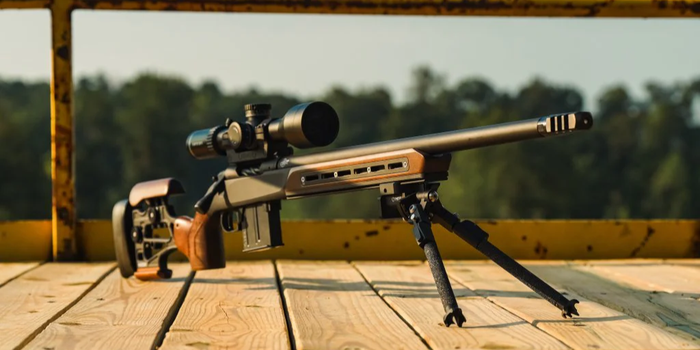
Once the rifle stops moving, the priorities change. A wider forend can create a broader contact patch between the rifle and the support surface. That broader interface can help the rifle settle more evenly on backpacks, bags, blind rails, tripods, and structured field supports. The benefit is not width alone. It is how the underside of the forend meets the support. A wider forend with poor underside geometry may still roll or rock. A moderately wide forend with a flatter underside may settle more predictably.
That is why supported stability should not be judged by width alone. The real question is how the forend contacts the surface beneath it.
Shape Often Matters More Than Width
Overall width is only one part of forend design. Underside geometry often matters more in the field.
A flatter underside creates more surface contact on bags, rails, barricades, and other structured supports. That can reduce side-to-side roll and make the rifle easier to settle before the shot.
A rounded underside can feel better in the hand and may adapt more naturally to uneven field rests such as branches, rocks, and terrain. A hunting rifle often needs both qualities.
It has to carry naturally in the hand and still settle well when the support is imperfect. That is why the shape of the forend matters as much as the measurement across its widest point.
Carry Comfort Depends on More Than Forend Width
Hunters often compare forend measurements without considering the rest of the rifle. Forend width never works alone. Barrel contour, optic weight, sling placement, magazine setup, and total rifle balance all affect how the forend feels in the hand.
A slim forend paired with a heavy barrel can still feel front-heavy because the rifle’s balance point moves forward. A moderately wider forend may still carry comfortably if the barrel is lighter and the rifle balances closer to the action.
Optic weight can also change the equation. A heavier scope raises the rifle’s center of mass and may change how the support hand manages the rifle during carry and field movement.
Sling placement matters too. A sling mounted farther forward can change how the rifle hangs and how the support hand catches the forend during movement. Forend feel is the result of the full rifle system, not the forend alone.
The Best Hunting Stocks Are Designed Around Use
Slim and wide forends solve different problems. They are not competing for the same job. A rifle carried all day through cover benefits from a forend that the hand can close around naturally. A rifle used often from bags, blinds, tripods, or supported field positions may benefit from more underside surface and a more stable rest contact.
The right forend geometry depends on how much time the rifle spends in the hand and how often it is used from support. For hunting stocks, the objective is not to maximize width. The objective is to place material where it improves the way the rifle is carried, supported, and controlled in real field positions.
A stock intended for serious field use should provide a secure grip during hours of movement while still presenting enough underside geometry to settle when a shot opportunity appears. That is a design balance, not a size contest.
Where Stock Design Becomes More Than Measurements
Forend width is only one element of stock design. Geometry only does its job if the structure beneath it supports the rifle correctly through field use.
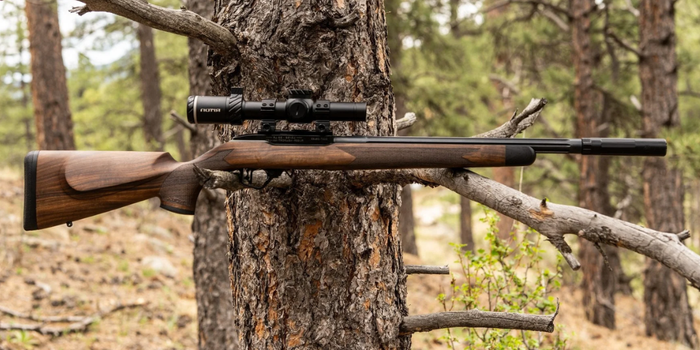
On WOOX hunting stocks such as Elegante, Claro American Walnut forms the shooter-facing surfaces: the forend carried through the field, the grip held by the firing hand, the comb against the cheek, and the buttstock seated into the shoulder.
Inside the stock, an aerospace-grade aluminum mini-chassis supports the action beneath the wood. Those materials do different jobs. The walnut is where the hunter meets the rifle. The mini-chassis is where the action receives support.
That division matters because the shooter and the receiver need different things from the stock. The shooter needs defined contact surfaces. The action needs a stable support structure beneath the stock.
How Elegante Applies This to a Hunting Stock
The WOOX Elegante applies this approach to a traditional hunting stock. Claro American Walnut gives the rifle its field interface: the forend, grip, comb, and shoulder contact surfaces. The integrated aerospace-grade aluminum mini-chassis supports action fitment beneath the stock.
For a hunting rifle, that combination matters because rifle forend geometry is not only about the support hand. It is connected to how the rifle balances, how the barrel channel is shaped, how the action is supported, and how the stock settles into field positions. Elegante Sporter is built around traditional hunting priorities: carry, shoulder mount, and field handling.
Its forend should be evaluated in that context. Not as a benchrest surface. Not as a competition barricade tool. As the part of the rifle the hunter carries for hours and then rests on whatever the field provides.
How to Evaluate a Forend Before Choosing a Stock
Start with how the rifle will be used. A rifle carried through timber, mountains, or uneven ground should be judged first by how the support hand closes around the forend. A rifle used often from blinds, bags, sticks, or natural rests should also be judged by how the underside settles on support.
The following checks help evaluate forend geometry:
- Does the support hand close naturally around the forend?
- Does the rifle feel controlled without constant grip tension?
- Does the forend balance well with the barrel contour and optic weight?
- Does the underside settle on a pack, bag, rail, or field rest without excessive roll?
- Does sling placement change how the rifle hangs during movement?
- Does the barrel channel match the installed barrel contour?
- Does the selected stock support the rifle’s exact action, inlet, and fitment requirements?
These checks matter because a forend that feels good in one position may not work as well in another. The right rifle stock should match the rifle’s intended field role, not only its action footprint.
Slim vs Wide Forend: The Practical Difference
A slim forend usually favors carry. It lets the hand close more naturally around the stock and can reduce grip effort during long movement. A wider forend usually favors supported contact. It can give the rifle more surface area on bags, rails, packs, and structured rests. A flatter underside can help the rifle settle. A rounded underside can feel better in the hand. A tapered hunting forend may combine both ideas by staying comfortable during carry while retaining enough underside surface for practical support. The decision is not simply slim or wide.
The decision is where the stock needs material and where it does not. A hunting rifle spends more time moving through the field than resting on a bench. That means the best hunting stock is not defined by the narrowest or widest forend. It is defined by proportions that match how the rifle will actually be carried and supported.
Slim forends can reduce carry effort. Wider forends can provide broader supported contact. Underside shape, barrel contour, optic weight, sling placement, and rifle balance decide how those differences feel in the field. Designing the geometry is only part of the work. Maintaining that defined geometry through years of field use matters too.
WOOX approaches that problem through material roles: Claro American Walnut for the shooter-facing stock surfaces and an aerospace-grade aluminum mini-chassis for action support where the rifle needs structure beneath the wood. The result is not width for the sake of width. It is stock geometry built around how the rifle is carried, supported, and used.
FAQs
Does a wider rifle forend improve accuracy?
Not by itself. A wider forend can create a broader contact surface on backpacks, bags, blind rails, or field supports, which may help the rifle settle more consistently. Mechanical accuracy still depends on the rifle, ammunition, optic, installation, and shooting conditions.
Why do hunting rifles usually have slimmer forends?
Hunting rifles spend far more time being carried than fired. A slimmer forend allows the support hand to close naturally around the stock, which can reduce grip effort and improve carry comfort during long walks through the field.
Is a slim or wide forend better for hunting?
Neither is universally better. Slim forends generally favor carry comfort and faster handling, while wider forends can provide more stable contact on supported shots. The right choice depends on how the rifle is used.
Does barrel weight affect how a forend feels?
Yes. Barrel contour shifts the rifle’s balance point. A heavy barrel can make a slim forend feel front-heavy, while a lighter sporter barrel may keep a moderately wider forend comfortable to carry.
Why does underside shape matter on a rifle forend?
Underside shape controls how the rifle contacts bags, packs, rails, branches, and other field supports. A flatter underside can reduce rolling on structured supports, while a more rounded underside may feel better in the hand and adapt more naturally to uneven terrain.
Why does WOOX combine Claro American Walnut with an aluminum mini-chassis?
On WOOX hunting stocks such as Elegante, Claro American Walnut forms the surfaces the hunter carries, grips, shoulders, and controls. An aerospace-grade aluminum mini-chassis supports the action beneath the stock. Each material performs a different role: the walnut serves the shooter-facing interface, while the mini-chassis supports action fitment and internal structure.