Wind is the dominant variable in long-range shooting. A 5 mph crosswind creates significant drift at 600+ yards, turning solid calls into clean misses on steel or game. PRS and NRL stages require consistent interpretation of these changes from each firing position.
1. The Professional’s Primary: Mirage Observation
While electronic tools are vital, mirage is the most reliable real-time visual cue for downrange wind behavior. Mirage is the heat shimmer rising from the ground, and its movement provides a direct "read" of the air between you and the steel.
How to Interpret Mirage Flow:
- Vertical Boiling: Indicates zero wind or a direct head/tail wind.
- Light Wave: Suggests 1–3 mph crosswind.
- Horizontal Flow (Boiling Over): Suggests a 4–5 mph crosswind.
Watch Josh Mazzola demonstrate live mirage reading on slow wind days: Long Range Shooting - Reading Wind with Mirage | 9-Hole Reviews
Aggressive Slant: Indicates high-velocity wind, typically exceeding 12 mph.
Use your scope’s parallax adjustment to your advantage. Don't focus solely on the target. Instead, focus your parallax at the mid-point of the bullet’s flight path. This allows you to see the "river of air" the bullet must travel through.
Once you can read mirage, the next step is building a reliable baseline.
2. Tools and Measurements: Building the Baseline
To turn a guess into a confident wind call, you need real data. Modern ballistics rely on a two-step measurement process using specialized hardware.
Recommended Gear: Kestrel anemometers that provide precise baseline wind data, ensuring your initial readings are accurate. Mirage gives you the real-time wind picture downrange, while a Kestrel gives you the baseline at the firing position.
3. Environmental Indicators: The Natural Anemometer
When mirage is soft, look to the environment. Calibrating your eyes to these specific cues allows for rapid, accurate "bracket" calls during a stage.

4. Applying Corrections: Stability is Key
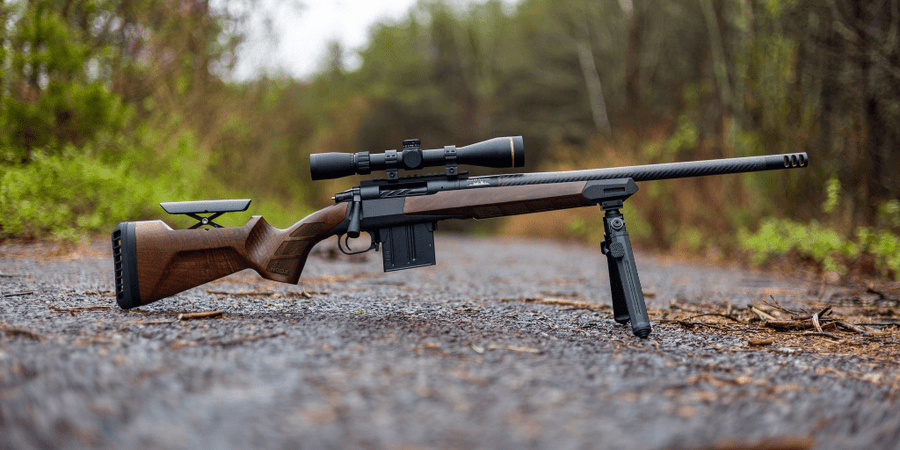
Wind demands precise holds. Even the best wind call is useless if your rifle isn't a stable platform.
A stable platform supports accurate holds.
Mastering wind requires a precise cheek weld to ensure your eye is perfectly indexed with the optical center.
5. Applying Professional Corrections
Once you have your speed and direction, use a ballistic app (like GeoBallistics) to calculate drift based on your bullet's Ballistic Coefficient (BC) and muzzle velocity.
- Wind value clock system” (12–3–6–9 o’clock) : The wind value clock system uses a clock-face reference. 12 and 6 o’clock winds (head/tail) have minimal effect on drift, while 3 and 9 o’clock winds (full crosswind) produce maximum drift, with angled winds creating proportional (half or quarter) value corrections
- If the wind is pulsing between 5 and 10 mph, bracket the condition and note your minimum and maximum holds before you break the shot.
- You don't need a rifle to practice. While hiking, make a wind call based on environmental cues, then verify it with a handheld meter.
3 Common Pitfalls to Avoid
- Over-valuing Target-End Wind: The wind at the first 1/3 of the flight path has the most dramatic effect on your final point of impact.
- Ignoring Terrain Funnels: Draws, gaps, and other constrictions can amplify wind speed and create small micro-climates that change your call.
- Static Hold in Variable Gusts: If you see the mirage change speed while your finger is on the trigger, adjust your hold immediately. Never shoot a "stale" wind call.
Frequently Asked Question:
How far will a 5 mph wind drift a bullet?
Drift depends on bullet weight, ballistic coefficient, muzzle velocity, and wind angle. Use a ballistic app to calculate your exact hold for the conditions.
What is "boiling" in a scope?
Vertical mirage movement. It indicates that the wind is either dead calm or blowing directly toward or away from you.
Best scope magnification for mirage reading?
8-12x reveals mirage flow without target blur. Higher mag (20x+) distorts the "river of air."
When mirage disappears in cold weather?
Trust environmental cues + Kestrel. Mirage requires ground heat. Beaufort scale still applies.
How to practice wind calls without range access?
Hike with Kestrel. Call wind from grass/trees, verify reading. Builds calibration muscle memory.
Full-value vs half-value wind?
Full-value = 90° crosswind (max drift). Half-value = 45° (50% drift effect). Angle multiplies speed.
Spotter vs shooter wind responsibility in PRS?
Shooter owns the final call. Spotter provides bracket range. Shooter integrates mirage + environment.