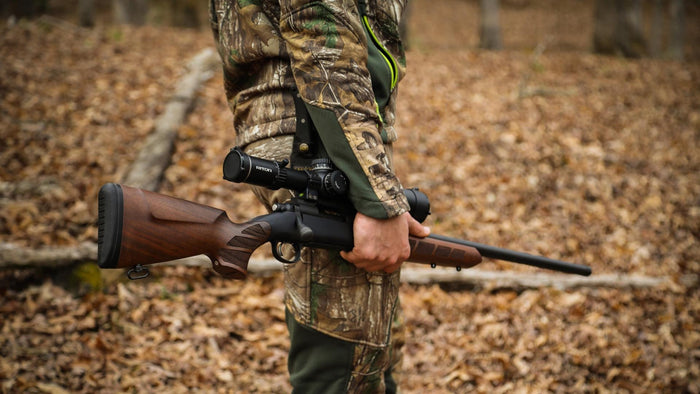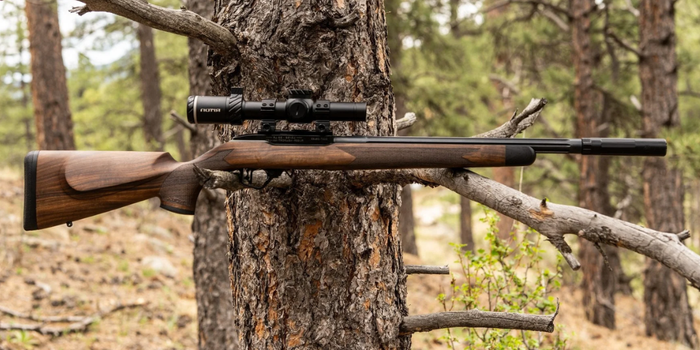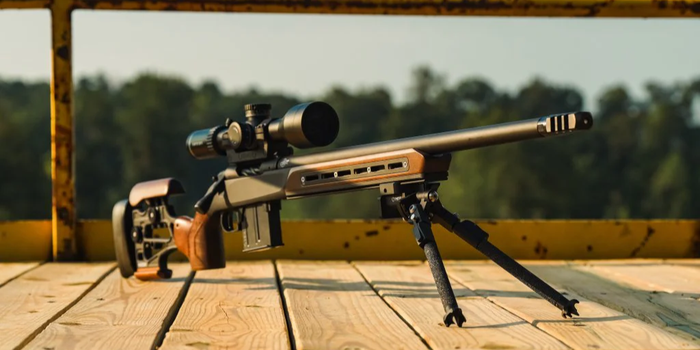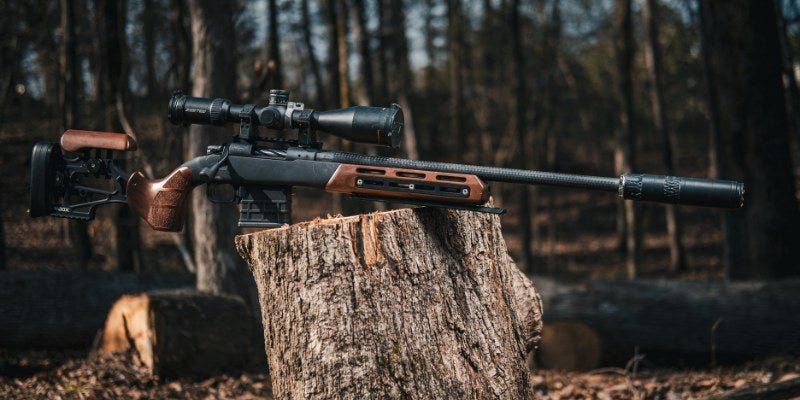
Firearm furniture is not only a visual decision.
The stock, grip, and forend are the parts of the firearm the shooter touches most often. They shape how the firearm mounts, how it carries, how it settles under support, and how it feels after long use in heat, cold, rain, or repeated handling. Material choice changes that experience.
American Walnut, polymer, aluminium, laminate, and hybrid furniture systems each bring a different relationship between heat, grip, control, weight, and long-term feel. The right choice is not the material that looks best in a photograph. It is the material and geometry that match how the firearm is actually used.
Material Feel Starts Where the Hand Meets the Rifle
A shooter does not experience a stock as a material sample but the feel of shape, surface, temperature, texture, and balance at the same time.
A material can be strong and still feel wrong if the shape and surface do not support the shooter. A material can look traditional and still perform a modern role if it is shaped, supported, and finished correctly.
Heat Feel: Why Materials Do Not Feel the Same
Heat feel is one of the first differences shooters notice.
Aluminum, polymer, and walnut do not manage heat the same way. Exposed aluminum can feel cold in winter and warm after sun or repeated handling because metal transfers heat quickly to and from the hand. Polymer often feels less thermally reactive in the hand than exposed metal, but its surface texture and molded shape determine much of the grip experience. American Walnut has a different feel because it is a natural material with grain, density, and finish.
This does not mean one material is automatically better. It means the material must match the use.
A precision rifle chassis may benefit from aluminum structure where rigidity and a defined action interface matter. A shotgun forend or rifle grip may benefit from a warmer, more natural hand surface where contact, control, and carry feel matter. A hard-use polymer stock may make sense where low maintenance and weather resistance are the priority.
The important question is not simply what the furniture is made from. The important question is where each material sits in the system and what job it performs.
Grip: Texture Is Only Part of Control
Grip is often discussed as texture. That is only part of the answer.
Control comes from the full relationship between the hand and the firearm:
- grip angle
- palm swell
- forend width
- surface finish
- checkering or texture
- finger position
- support-hand indexing
- stock geometry
A rough surface can still feel poorly controlled if the shape is wrong. A smooth surface can still feel secure if the geometry naturally places the hand where it belongs.
American Walnut gives stock makers a material that can be shaped with precision and finished to preserve a direct hand-to-stock feel. The surface does not need to imitate molded texture to create control. The grain, finish, contour, and hand position all work together.
Polymer can provide molded texture, weather resistance, and consistent production geometry. Aluminum can provide rigid structure and mounting points. Laminate can provide stability and a distinct layered appearance. Each material solves a different problem.
The mistake is treating grip as one feature instead of a complete interface.
Control Changes With Balance
Furniture material also changes balance.
A firearm that feels controlled at the bench may feel different after several hours of carry. A shotgun that swings naturally with one forend may feel slower with another. A lever action that feels quick with slim furniture can become front-heavy when too much material or hardware is added forward of the receiver.
Balance is not just total weight. Balance is where the weight lives.
Forward weight can make a firearm feel steadier in some supported positions, but it can also slow mounting speed and increase fatigue during long carry. Rearward weight can change shoulder feel. A thicker grip can improve control for one shooter and feel crowded for another.
That is why furniture should be selected as part of the complete firearm, not as an isolated part.
Optics, sling hardware, lights, rails, bipods, suppressors, magazine systems, and barrel profile all change how the firearm feels. The stock or forend must be judged with the firearm fully configured.
American Walnut: More Than Appearance
American Walnut is often treated as a traditional material. That is accurate, but incomplete.
Walnut changes how firearm furniture feels because it brings a different surface, weight distribution, and ownership pattern than polymer or metal. It has grain. It has density variation. It develops handling character over time. It can be maintained, refinished, and kept in service when cared for correctly.
The appeal is not only visual.
A walnut grip or stock can feel warmer in the hand than exposed metal. It can carry a surface finish that ages with use. It can give a rifle or shotgun a more grounded feel without turning it into a purely decorative object.
For WOOX, American Walnut is not used as a nostalgic shell over a modern firearm. It is selected, shaped, finished, and paired with engineered structure where the firearm requires it.
That distinction matters. Walnut provides the hand-facing material character. Aluminum or other internal structures can provide mechanical support. The two materials do not need to compete. They can serve different purposes in the same component.

Polymer: Practical, Light, and Low Maintenance
Polymer furniture exists for good reasons. It is generally light, moisture resistant, economical to produce, and easy to maintain. For rifles and shotguns exposed to rough weather, hard transportation, or minimal care, polymer can be a practical choice.
Polymer also allows molded texture and repeatable shapes across large production runs. That can be useful where uniformity matters more than material character.
Polymer does not develop patina the same way walnut does. It does not offer the same grain structure, repairability, or long-term surface character. It can be highly functional, but it usually does not create the same relationship between the owner and the firearm over decades of use.
For some firearms, that is acceptable. For others, especially rifles or shotguns built to be kept and carried for years, material character becomes part of the decision.
Aluminum: Structure, Rigidity, and Contact Management
Aluminum earns its place where structure matters.
Modern chassis systems, bedding blocks, internal skeletons, rails, and mounting interfaces often rely on aluminum because it can be machined into defined surfaces and rigid forms. That makes it valuable around action support, accessory mounting, and structural reinforcement.
But exposed aluminum does not feel like walnut or polymer. It can feel colder in low temperatures and warmer under direct sun or extended exposure. It can also change the sound and feel of contact during field use.
This is why hybrid design matters.
Aluminum can provide the internal mechanical foundation, while American Walnut provides the external hand-facing surface. That combination allows the firearm furniture to feel natural in the hand while still benefiting from a more defined structure where the rifle or shotgun needs support.
Laminate: Stability With a Different Feel
Laminate stocks and furniture occupy a middle ground.
Laminate is made from bonded layers of wood, which can improve dimensional consistency compared with a single natural blank. It can be strong, stable, and visually distinct. It also has a different feel from American Walnut because the material structure is engineered rather than cut from a single walnut blank.
For some shooters, laminate is a practical answer. For others, it lacks the individual grain character and long-term patina that define walnut.
Again, the right choice depends on the firearm’s role.
A bench-oriented build, a field rifle, a defensive shotgun, and a heritage lever gun do not ask the same thing from their furniture.
Surface Finish Changes the Material
Material is only one part of feeling. Finishing changes everything.
A walnut stock with a good finish does not feel like raw wood. A heavily coated stock does not feel like an oil-finished one. A textured polymer grip does not feel like a smooth polymer forend. Anodized aluminum does not feel like bare metal.
The finish controls how the surface meets the hand.
For walnut, finish quality affects moisture resistance, touch, maintenance, and how the surface develops character over time. A good finish should protect the material without making it feel disconnected from the hand.
For polymer, molded texture and surface design influence traction.
For aluminum, coating, temperature, and edge treatment influence comfort and control.
Furniture feel is never material alone. It is material, finish, geometry, and use.
How Material Choice Affects Different Firearm Platforms
Shotguns
Shotgun furniture affects shoulder mount, pump control, recoil path, and support-hand repeatability. A forend must feel controlled during repeated cycling. A stock must help the shooter mount consistently and manage recoil through the shoulder.
For pump-action shotguns, forend shape and grip surface matter as much as material. A forend that looks right but does not support repeatable hand placement will not feel right in use.
Lever Actions
Lever-action furniture affects carry balance, support-hand placement, cycling clearance, and the rifle’s slim handling profile. Added material or accessories forward of the receiver can change the way the rifle swings and carries.
American Walnut can suit lever-action platforms well because it supports a field-oriented, long-ownership rifle without turning the firearm into a heavy accessory platform.
AR Platforms
AR furniture affects grip angle, stock weld, handguard heat feel, accessory placement, and control during repeated shooting. Polymer, aluminum, and walnut each change the AR’s feel in different ways.
A walnut AR furniture set changes more than appearance. It changes the hand surface, the visual language, and the way the rifle feels during handling.
Bolt-Action Rifles
Bolt-action furniture affects cheek weld, recoil path, support-hand position, bedding interface, and field carry. Material choice matters, but geometry and action support matter more than appearance.
This is where hybrid systems can make sense: American Walnut where the shooter touches and carries the rifle, engineered structure where the action needs support.
Common Material-Choice Mistakes
Most furniture mistakes come from choosing the material before defining the use.
Common mistakes include:
- choosing walnut only for appearance without confirming fitment and geometry
- choosing polymer only for weight without considering balance or grip feel
- choosing aluminum-heavy furniture without considering cold-weather or heat feel
- adding M-LOK accessories until the firearm becomes front-heavy
- choosing aggressive texture that feels good in the store but uncomfortable during repeated use
- ignoring optic height, sling placement, and support-hand position
- assuming material alone will improve control
Material should solve a handling problem. It should not create a new one.
How WOOX Thinks About Material Choice
WOOX does not treat American Walnut as decoration.
The material is part of the firearm’s relationship with the shooter. It shapes heat feel, grip character, carry balance, and long-term ownership. It also records use in a way polymer and exposed metal do not.
At the same time, modern firearm platforms require mechanical structure. Receivers, actions, accessories, and support systems need defined interfaces. That is why WOOX designs often pair American Walnut with machined aluminum structure where the platform requires additional support.
The walnut provides the hand-facing material character. The aluminum provides support where the platform requires it.
That is the point: not tradition instead of engineering, and not engineering at the expense of material.
Wood and metal work together.
Final Check Before Choosing Firearm Furniture
Before choosing firearm furniture, confirm:
- the exact firearm platform and model
- stock, grip, and forend compatibility
- barrel profile or magazine tube configuration where relevant
- optic height and cheek position
- sling placement
- accessory needs
- expected weather exposure
- carry distance
- supported versus unsupported shooting use
- long-term ownership priorities
The right material is the one that supports the way the firearm is actually used.
Heat, grip, and control are not separate questions. They meet at the stock, grip, and forend every time the firearm is carried, shouldered, or supported.
FAQs
Does firearm furniture material affect heat feel?
Yes. Walnut, polymer, aluminum, and laminate feel different in hot, cold, and wet conditions because each material transfers heat, holds finish, and meets the hand differently.
Is walnut firearm furniture only for appearance?
No. American Walnut changes surface feel, balance, grip character, and long-term ownership. It is also serviceable when cared for correctly.
Does aluminum furniture get hotter or colder than walnut?
Exposed aluminum can feel hotter or colder to the hand because metal transfers heat more quickly than walnut or polymer. In hybrid systems, aluminum is often used structurally while walnut remains the primary hand-facing surface.
Is polymer better for hard-use firearms?
Polymer can be a practical choice because it is generally light, moisture resistant, and low maintenance. It is not automatically better. The right choice depends on the firearm’s role, fitment, geometry, and handling requirements.
What matters more: material or shape?
Shape often matters as much as material. Grip angle, forend width, comb height, surface finish, and stock geometry all affect control.
Why does WOOX combine walnut and aluminum?
WOOX combines American Walnut and machined aluminum so each material serves a different role. Walnut provides the hand-facing material character. Aluminum provides structure where the firearm platform requires it.
What should I check before replacing firearm furniture?
Confirm the exact model, compatibility, barrel or magazine tube setup, optic height, sling placement, accessory needs, and how the firearm will be carried and supported.