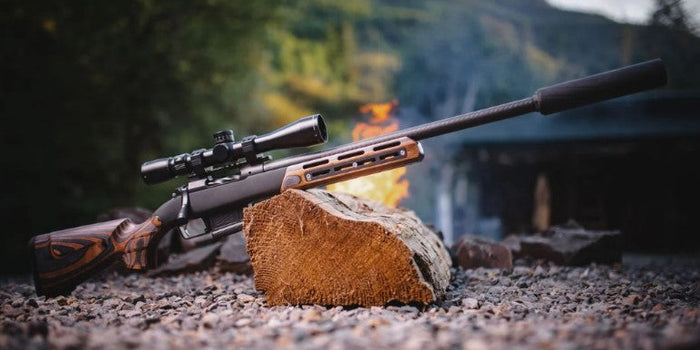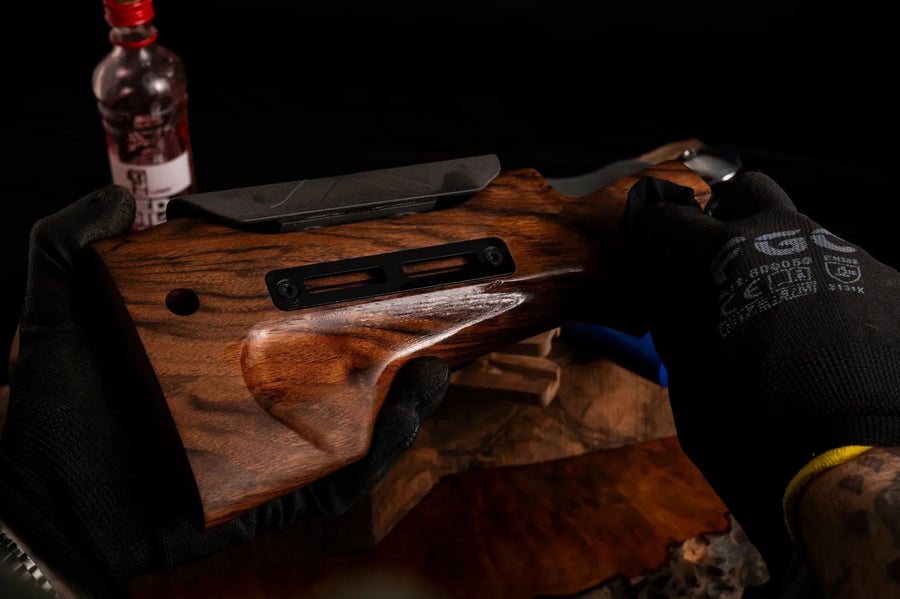
A walnut rifle stock is built to be carried, not hidden from the field. Rain, snow, mud, sweat, cold air, and long days of carry are part of hunting. A rifle that never leaves perfect weather is not being used the way a hunting rifle was meant to be used.
But field use and neglect are not the same thing.
A properly finished walnut stock can handle normal exposure to the field, but moisture should not be left sitting on the surface, around hardware, under sling points, near the recoil pad, or in tight areas where wood, metal, and hardware meet.
Walnut care after a hunt is simple: unload the firearm, wipe it down, let it dry correctly, inspect the stock and hardware, and store the rifle in a stable environment. That routine protects the stock without overworking it.
First: Confirm the Rifle Is Unloaded
Before cleaning, drying, or inspecting any rifle, confirm that the firearm is unloaded.
Remove the magazine if the rifle uses one. Open the action. Visually inspect the chamber and confirm it is clear. Keep ammunition away from the cleaning area.
Walnut care starts with safe firearm handling.
A rifle stock may be the focus of the maintenance routine, but the rifle is still a firearm. Treat the process with the same mechanical discipline you would use for checking action fit, optic mounting, or barrel condition.
Walnut Stocks Are Built for the Field, But Moisture Still Matters
Walnut has been used in rifle stocks for generations because it offers strength, workability, field feel, and natural character. It is not fragile furniture.
A walnut-stocked hunting rifle can be carried in rain, snow, cold air, and brush.
The issue is not brief field exposure. The issue is moisture left unattended after the hunt.
Water can sit along the grain, collect around hardware, settle near the recoil pad, or hide where the action meets the stock. Snow can melt slowly into seams and contact points. Sweat from hands, gloves, and slings can leave salt and residue behind.
That is why after-hunt care matters.
The goal is not to make walnut behave like synthetic material. The goal is to respect what walnut is: a natural stock material that rewards proper maintenance and long-term ownership.

What to Do Immediately After Rain or Snow
When the rifle comes out of rain, snow, heavy humidity, or wet field conditions, do not put it straight into long-term storage.
Start with a clean, dry cloth. Wipe the exterior of the stock carefully, following the grain where possible. Remove standing moisture from the forend, grip, comb, cheek area, and buttstock.
Pay attention to checkering, grooves, textured areas, sling mounting points, and the joint between the recoil pad and stock.
Do not scrub aggressively.
Moisture removal should be controlled, not abrasive.
Mud, grit, and ice crystals can scratch the finish if they are rubbed hard across the surface. If residue is present, lift it away gently instead of grinding it into the wood.
If the rifle has been in snow, remember that snow becomes water as the rifle warms. A stock that looks dry outside may still have moisture sitting in corners or around hardware after the rifle reaches room temperature.
Check it again after it has had time to sit.
How to Dry a Walnut Rifle Stock Safely
Dry walnut stocks slowly.
Use a clean dry cloth first, then let the rifle sit at room temperature with air circulation.
Do not place the rifle next to a heater, fireplace, stove, heat vent, direct sunlight, or any intense heat source.
Fast drying is not better drying.
Direct heat can stress wood and finish. It can also create uneven drying, especially near end grain, checkering, inlets, and edges.
A stock should be allowed to come back to normal condition gradually.
If the rifle came in from cold weather, give it time to acclimate. Moving a cold rifle into a warm indoor space can create condensation on metal and sometimes around stock contact points.
Wipe the rifle, let it sit, then inspect it again.
A rifle brought from freezing temperatures into a warm room may develop condensation on metal surfaces and around stock interfaces. This moisture should be wiped away and rechecked after the rifle reaches room temperature.
The second wipe-down often matters more than the first.
Where Moisture Hides After a Hunt
The obvious water is rarely the whole problem.
After wet field use, inspect the areas where moisture can collect:
- Around sling studs or QD cups
- Along the recoil pad edge
- Inside checkering or textured grip areas
- Around the action inlet
- Along the barrel channel
- Near bottom metal or magazine hardware
- Around screws, washers, and attachment points
- Under the forend where the rifle was carried or supported
- Around any place where metal, wood, and hardware meet
These areas deserve attention because moisture can sit there longer than it does on broad exterior surfaces.
A walnut stock does not need harsh treatment after every hunt, but it does need inspection in the places where water, sweat, mud, or snow can stay trapped.
Mud, Sweat, Field Residue, and Dust: What to Check
Weather is only part of field use.
A hunting rifle can come back with mud on the forend, sweat around the grip, dust along the comb, field residue near the sling or stock surface, or plant material caught around hardware.
These residues should not be left on the stock.
Use a dry cloth first. If a light cleaning is needed, use a barely damp cloth with mild soap only when appropriate for the finish, then dry the area immediately with a clean cloth.
The cloth should be damp, not wet.
Do not soak the stock. Do not allow moisture to run into the action, inlet, unfinished edges, or exposed wood areas.
For checkering or tight curves, wrap the cloth around a finger or use gentle pressure. Avoid stiff brushing unless the finish and surface are known to tolerate it.
The rule is simple: remove residue without forcing water into the wood or under the hardware.
What Not to Use on a Walnut Stock
A walnut rifle stock should not be treated like a metal barrel, a synthetic stock, or unfinished furniture.
Avoid using harsh bore solvents on the wood finish. Solvents intended for copper, carbon, lead, or bore fouling may be useful for metal maintenance, but they do not belong on walnut unless the manufacturer specifically says they are safe for the finish.
Avoid soaking the stock with water, allowing heavy oil buildup, using aggressive cleaners, abrasive pads, or strong degreasers, drying the stock with heat, or leaving the rifle in a damp case.
Avoid assuming every walnut stock needs oil after every wet hunt.
Finish type matters. Some stocks may need occasional maintenance with the correct oil or wax. Others may only need wiping, drying, and inspection.
Follow the current product-specific care guidance for the stock in front of you.
More product is not always better care.

Should You Oil a Walnut Stock After Rain?
Not automatically.
A common mistake is to treat every wet hunt as a reason to apply more oil. That can create buildup, a sticky surface, uneven appearance, or unnecessary finish issues depending on the stock and finish type.
Oil or wax maintenance should be based on the stock’s finish, condition, use, and manufacturer guidance.
If the stock looks dry, has been exposed to heavy use, sweat, heat, humidity, dirt, or mud, maintenance may be appropriate.
But the right answer is not to flood the stock with oil.
Use a controlled approach and follow the care instructions for the specific walnut finish.
A walnut stock should feel protected, not coated.
Storing a Walnut-Stocked Rifle After Bad Weather
Do not store a wet or damp rifle in a soft case.
A soft case is useful for transport, but it can trap moisture after rain or snow.
If a rifle goes into a damp case and stays there, moisture can remain against wood and metal longer than expected.
After a wet hunt, remove the rifle from the case when it is safe to do so.
Wipe it down. Let it air-dry at room temperature. Inspect it again before putting it away.
Long-term storage should be stable, dry, and controlled.
Avoid damp basements, hot vehicles, garages with large temperature swings, or sealed cases that trap humidity.
Walnut and metal both prefer consistency.
Extreme dampness can encourage corrosion and finish problems. Extreme dryness can also be hard on wood over time.
The best storage environment is not dramatic. It is stable.
Check the Metal, Not Only the Walnut
After rain or snow, the stock is only one part of the inspection.
Moisture also affects metalwork, fasteners, optics, sling hardware, magazines, bottom metal, and mounting points.
A walnut-stocked rifle is still a complete mechanical system.
Check exposed metal surfaces for moisture. Check around sling hardware. Look at action screws and bottom-metal areas without changing torque unless maintenance or inspection requires it.
Inspect the barrel channel and any place where moisture may have moved under pressure or capillary action.
Do not publish or follow a universal torque number for action screws unless it comes from the current product-specific installation guide for that exact stock, rifle, and hardware setup.
If anything appears loose, damaged, swollen, cracked, rusted, or inconsistent, stop and inspect further before returning the rifle to field use.
When Field Marks Are Normal and When They Are Not
Walnut gains character with use.
Small handling marks, light field wear, and minor finish marks can be part of long-term ownership.
A hunting rifle that moves through timber, brush, trucks, blinds, packs, and weather will not remain untouched forever.
But there is a difference between character and damage.
A light surface mark is not the same as a crack near the action inlet. A small scuff is not the same as a loose sling stud. A finish rub is not the same as swelling around metal contact points.
Inspect after hard use.
Look for changes around high-stress or high-contact areas: action inlet, recoil lug area, tang area, sling attachments, recoil pad, forend, barrel channel, and any hardware interface.
The goal is not to keep the stock perfect. The goal is to keep it sound, stable, and ready.
Bad Weather Field Routine: Step by Step
After a wet hunt, use a simple routine. First, confirm the firearm is unloaded.
Second, remove visible moisture with a clean dry cloth.
Third, wipe the walnut exterior gently, paying attention to grain direction, checkering, curves, and hardware edges.
Fourth, inspect areas where water can collect: sling points, recoil pad, action inlet, barrel channel, magazine area, bottom metal, and screw locations.
Fifth, let the rifle air-dry at room temperature. Do not use heat or direct sunlight.
Sixth, inspect again after the rifle has warmed and dried.
Seventh, address metal surfaces and hardware as part of normal firearm maintenance.
Eighth, store the rifle in a dry, stable environment. Do not leave it in a damp soft case.
This routine is not complicated.
It is repeatable.
That is what makes it useful.
Where WOOX Fits Into Walnut Care
WOOX builds walnut stocks for rifles that are meant to leave the safe.
The point of American walnut is not to keep the rifle untouched. It is to give the rifle field character, balance, warmth in the hands, and a material connection that synthetic stocks do not replicate in the same way.
But walnut rewards owners who understand the difference between field use and neglect.
A WOOX stock should be wiped down, dried correctly, inspected around hardware, and stored with the same mechanical respect given to the rifle’s action, barrel, optic, and magazine system.
Wood and metal work together.
Care should protect both.
Do not overthink walnut care after a hunt.
Wipe the stock. Dry it slowly. Check the hidden areas. Avoid harsh chemicals and direct heat. Store the rifle correctly.
A walnut rifle stock furniture does not need to be treated like fragile furniture.
It needs to be treated like part of the rifle.
FAQ
Can a walnut rifle stock get wet?
Yes, a properly finished walnut rifle stock can handle normal field exposure to rain or snow. The important step is after-hunt care. Moisture should be wiped off and the stock should be allowed to dry slowly at room temperature.
Should I oil a walnut rifle stock after rain?
Not automatically. Oil or wax maintenance depends on the stock finish, condition, use, and manufacturer guidance. Do not flood the stock with oil after every wet hunt.
Can I dry a walnut rifle stock with a heater?
No. Avoid heaters, direct sunlight, open flame, heat vents, and other intense heat sources. Dry the stock with a clean cloth and allow it to air-dry at room temperature.
Is snow worse than rain for a walnut stock?
Snow can be easy to overlook because it may melt after the rifle comes indoors. After hunting in snow, wipe the rifle down, let it warm gradually, and inspect again for moisture around hardware, checkering, the recoil pad, and action areas.
Should I store a wet or damp rifle in a soft case?
No. A soft case can trap moisture against the rifle. After wet field use, remove the rifle from the case when safe, wipe it down, let it dry, and store it in a stable, dry environment.
What should I check after hunting in bad weather?
Check the stock surface, sling studs or QD cups, recoil pad edges, checkering, barrel channel, action inlet, bottom metal, magazine area, screws, optic mounts, and exposed metal surfaces.
Can harsh gun solvents damage a walnut stock?
Some bore solvents and aggressive cleaners can harm wood finishes. Keep harsh solvents off the walnut unless the product is specifically approved for that stock finish. Use controlled cleaning and follow product-specific care guidance.
How do I know if moisture damaged my rifle stock?
Look for swelling, raised grain, finish changes, cracks, loose hardware, or changes in barrel-channel clearance and action fit. If anything looks structurally wrong, inspect further before using the rifle again.