A rifle that shoulders naturally in September can feel different by December, even when nothing on the rifle has changed. The difference is the shooter’s contact with the rifle.
Insulated gloves increase hand bulk. Layered clothing moves the buttpad away from the shoulder pocket. Reduced tactile feedback changes how the trigger finger meets the trigger shoe. Grip shape, functional trigger reach, wrist angle, comb height, and length of pull determine whether a rifle continues to mount consistently in cold weather.
Winter fit is not only a trigger-guard issue. It is a stock-geometry issue.
Winter Clothing Changes the Shooter, Not the Rifle
The rifle does not change. Receiver dimensions, trigger position, barrel channel, comb line, and stock geometry remain fixed. Winter clothing changes the shooter’s relationship with those fixed points.
Even a few millimeters of glove insulation can change how deeply the firing hand seats into the grip. Layered jackets can shorten functional length of pull by moving the buttpad farther from the shoulder pocket.
The rifle may still fit correctly in its mechanical dimensions, but the shooter may no longer contact it the same way. That is why winter rifle fit should be evaluated while wearing the same gloves, jacket, and base layers used during the hunt.
Grip Shape Determines More Than Comfort
A gloved hand does not wrap around the stock the same way a bare hand does.
Fingers must close farther before establishing a secure hold. If the grip is already large for the shooter’s hand, insulated gloves can force the wrist into greater extension and reduce trigger-finger independence.
Instead of pressing the trigger straight to the rear, the shooter may begin adding lateral pressure as the hand searches for a more natural position.
A well-shaped grip gives the firing hand a repeatable contact surface. That matters more in winter because gloves reduce tactile feedback.
Superleggera’s grip geometry gives the firing hand a defined contact surface, which becomes especially important when insulated gloves reduce feel and indexing.
The stock cannot remove glove bulk. It can give the shooter a clearer and more repeatable place to put the hand.
Trigger Reach Starts with Stock Geometry
Trigger reach is often discussed as though it belongs only to the trigger assembly. In practice, functional trigger reach is affected by the entire stock.
The mechanical distance between the back of the grip and the trigger face remains fixed by the rifle’s design. Whether that distance feels correct depends on the shooter’s hand, glove thickness, grip shape, wrist angle, and hand position.
Gloves can prevent the firing hand from seating as deeply against the grip. That increases functional trigger reach even though the rifle’s mechanical dimensions have not changed.
For winter hunting, the question is not only whether the trigger is accessible. The question is whether the shooter can reach it without rotating the wrist, shifting the hand, or changing cheek weld.
Trigger Guard Clearance Is Only Part of the Fit
Trigger guard clearance matters in cold weather. A glove must enter and exit the trigger guard safely without dragging, catching, or forcing the finger into the trigger before the shooter intends to fire.
Heavy gloves should never be forced into the trigger guard. If the glove interferes with safe trigger access or safe trigger exit, change the glove, adjust the setup, or wait until the shot can be taken safely.
Trigger guard clearance is only one part of winter fit. The more influential measurements remain behind the trigger guard: grip geometry, wrist angle, functional trigger reach, comb height, and length of pull. A larger trigger guard cannot correct a grip that forces the hand out of position. It cannot correct a stock that becomes too long once the shooter adds a heavy jacket. Winter fit has to be checked as a full system.
Why Layered Clothing Changes Length of Pull
Every insulated layer between the rifle and the shoulder changes how the stock mounts.
A thick jacket moves the buttpad farther from the shoulder pocket, making the rifle feel longer during the mount. That extra distance can force the firing arm to extend farther. It can also push the head forward as the shooter tries to maintain eye relief.
Those small compensations reduce mount consistency, especially from field positions where the shooter may not have time to rebuild the position slowly. A stock that feels correct in lightweight range clothing should still be checked in the clothing used during the hunt.
The correct test is not only whether the rifle can be shouldered. The correct test is whether it mounts naturally without the shooter needing to adjust the hand, head, shoulder, or eye position after the rifle is already up.
Comb Height and Eye Alignment Matter in Cold Weather
Winter clothing can change head position as much as hand position. A jacket collar, hood, neck gaiter, or insulated layer can alter how the cheek contacts the comb.
If the cheek weld changes, the shooter may lift the head to find the optic or press harder into the stock to rebuild the same sight picture. Both movements introduce inconsistency.
Comb height should allow the eye to align with the optic without searching for the sight picture. In winter, that check should be done while wearing the clothing that will actually be used in the field.
A rifle that feels aligned in September may not mount the same way with gloves, a jacket collar, and a heavier outer layer in December.
American Walnut Is Part of the Field Interface
American Walnut is not only an exterior material on a hunting stock. It is the surface the shooter touches, carries, mounts, and controls.
Material selection matters because wood is a natural material. Grain orientation, density, moisture content, machining, and internal stock structure all influence long-term fit and feel. For WOOX, walnut is not used as decoration over engineering. It is part of the rifle’s field interface. The shooter feels the walnut through the grip, comb, fore-end, and shoulder contact. Those contact points matter more when cold weather reduces hand feel and changes body position. The material has to carry more than appearance. It has to support the geometry the shooter uses in the field.
How Superleggera Applies These Principles
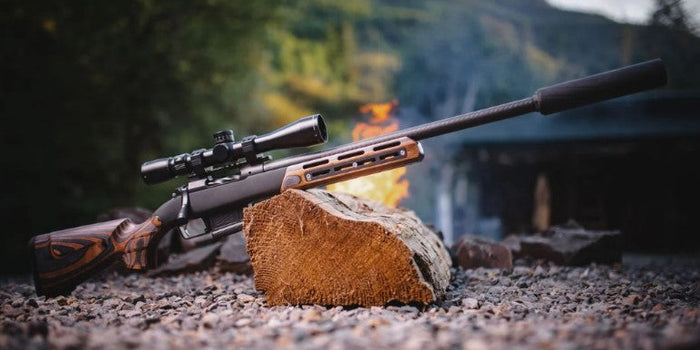
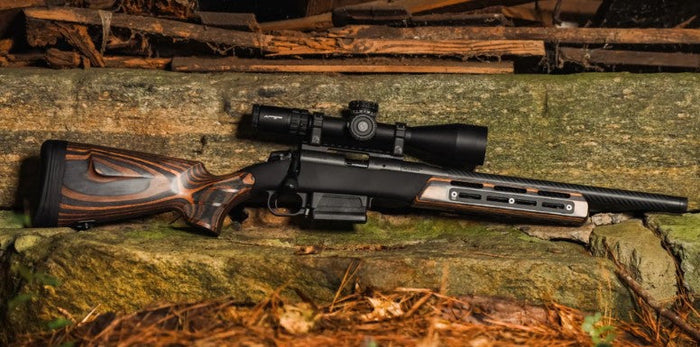
Superleggera is built around the problem winter hunting exposes: the rifle must remain light in the hand while giving the shooter defined contact points when clothing and gloves add bulk. The stock combines High-Grade American Walnut with a Carbon Core and WOOX’s V-Block Mini Chassis in Carbon Nylon.
The V-Block Mini Chassis in Carbon Nylon provides receiver support inside the stock. The High-Grade American Walnut forms the shooter-facing grip, comb, fore-end, and field contact surfaces.
Superleggeraalso uses geometry that matters in cold-weather handling: a negative comb design, minimal flat forend, flat toe line, ergonomic anti-slippery grip, and forward integrated QD, Pic rail, and M-LOK slots. Those features do not remove the need to check fit with winter gear. They give the hunter defined contact surfaces to evaluate when gloves and layers change the mount.
How to Check Winter Rifle Fit
Start with an unloaded rifle. Confirm the firearm is unloaded, visually inspect the chamber, and keep ammunition away from the fit-check area. Put on the gloves, jacket, and layers used during the hunt. Then mount the rifle repeatedly from a relaxed standing position. Watch what changes.
If the hand shifts after the rifle reaches the shoulder, the grip shape or functional trigger reach may not match the added bulk of the gloves. If the head lifts to find the optic, comb height or mount position may need review. If the buttpad catches on the jacket or forces the arm to extend too far, functional length of pull may be too long for winter clothing. Next, check trigger finger placement. The center of the finger pad should reach the trigger without requiring the wrist to rotate or the hand to slide forward. The glove should enter and exit the trigger guard without interference.
Then check the rifle from real field positions: standing, kneeling, seated, prone, over a pack, or against natural support.
Winter hunting rarely gives the shooter a perfect bench position. Fit should be evaluated where the rifle will actually be used.
Watch the Fit in Practice
Watch how WOOX evaluates rifle mounting, hand placement, and stock geometry in the field. The demonstration complements the fit checks described above and shows how repeatable mounting begins before the trigger is pressed.
Winter rifle fit is not a separate category of rifle setup. It is the same geometry tested under different field conditions. Gloves change grip feel. Jackets change functional length of pull. Cold-weather layers can change cheek weld, eye alignment, and trigger reach. The rifle does not need to change for the mount to change. That is why stock geometry matters before the season turns cold.
Superleggera reflects that WOOX approach: High-Grade American Walnut where the hunter contacts the rifle, a Carbon Core and V-Block Mini Chassis in Carbon Nylon where the rifle needs internal structure, and defined geometry built for long-term field use.
Cold weather exposes whether the rifle fits the shooter as it is actually carried and used.
The right stock does not fight the hunter’s gloves, jacket, or field position. It gives the hunter defined contact points to return to, season after season.
FAQs
Do winter gloves change rifle fit?
Yes. Winter gloves add hand bulk and reduce tactile feedback. That can change grip feel, functional trigger reach, wrist angle, and how consistently the firing hand returns to the same position.
Is trigger guard size the main issue with winter gloves?
No. Trigger guard clearance matters for safe access, but winter fit also depends on grip shape, wrist angle, trigger reach, comb height, and functional length of pull.
Can a stock fix poor trigger reach with gloves?
A stock cannot remove glove thickness. Stock geometry can help give the hand a defined contact surface, but the rifle should still be evaluated while wearing the gloves used during the hunt.
How does winter clothing affect length of pull?
Layered clothing moves the buttpad farther from the shoulder pocket. That can make the rifle feel longer and may force the shooter to adjust shoulder, arm, head, or eye position during the mount.
What should I check before hunting with gloves?
Check grip feel, trigger finger placement, safe trigger guard access, cheek weld, eye alignment, and buttpad position while wearing the same gloves and clothing used during the hunt.
What makes Superleggera relevant for winter hunting?
Superleggera combines High-Grade American Walnut, a Carbon Core, and WOOX’s V-Block Mini Chassis in Carbon Nylon with defined grip, comb, fore-end, and support geometry. That structure gives the hunter clear contact points to evaluate when winter gloves and clothing change the rifle mount.