A classic sporter rifle stock exists for a specific purpose: comfortable carry and fast mounting under hunting conditions. Its geometry reflects those priorities a slim forend, receiver-centered balance, and dimensions built for movement rather than bench shooting.
The term "sporter stock" is often used loosely. Some apply it to any traditional hunting rifle. Others reserve it for older walnut-stocked bolt actions. Neither definition explains why the profile developed, or why hunters continue choosing it today.
What defines a classic sporter stock is geometry developed around hunting use. It describes a rifle that carries comfortably, mounts quickly, and handles naturally when shot opportunities appear without warning.
What Makes a Rifle Stock a “Classic Sporter”?
A classic sporter rifle stock is defined less by material and more by geometry.
The profile developed around practical hunting realities: long hours of carry, brief shot opportunities, and shooting positions that are rarely ideal.
While dimensions vary by platform and maker, most classic sporter stocks share a recognizable geometry shaped by field use.
- A slim, tapered forend designed for easier carry
- A traditional wrist angle designed for quick shoulder mounting
- Moderate weight that favors carry rather than bench stability
- A straight or slightly dropped comb for fast sight alignment
- Rounded contours that reduce bulk during long carry
- Balance designed to avoid an overly front-heavy feel
The difference becomes obvious when compared to a precision chassis or modern tactical stock. A chassis system often prioritizes rigidity, vertical grip geometry, accessory mounting, and positional support. A sporter stock prioritizes mobility.
The Shape of a Classic Sporter Stock
The easiest way to understand a sporter stock is through its individual design choices.
Each major dimension of a traditional sporter stock reflects a field-use priority. How the rifle carries, how quickly it mounts, and how naturally it points from unsupported field positions.
A Slim Forend Built for Carry
A classic sporter stock typically uses a narrow forend rather than a broad, flat profile. The narrower profile keeps bulk to a minimum when the rifle is carried in one hand, across the shoulder, or through dense cover during long days afield.
Wider forends favor bags and barricades because they stabilize the rifle. In hunting rifles, reduced bulk often matters more than barricade stability.
A Traditional Grip Angle
Classic sporter stocks typically use a more angled wrist than modern precision-oriented rifles. The hand position encourages fast shoulder mounting and instinctive alignment rather than a fully vertical firing posture.
Vertical grips better support extended prone shooting, which matters more in precision contexts than in most hunting situations.
Most hunting shots occur from standing, kneeling, seated positions, or improvised rests rather than perfectly supported bench or prone positions. A traditional wrist angle supports a natural hand position when the rifle is brought to the shoulder quickly.
A Straight or Slightly Dropped Comb
Comb height influences how naturally the eye aligns behind the optic or sights.
Traditional sporter stocks often use comb geometry shaped around lower-mounted scopes, iron sights, and fast field mounting. When matched to the rifle’s sight height, that geometry can support natural eye alignment as the rifle comes to the shoulder.
Precision rifles often use adjustable cheek risers for optic alignment during prone or supported shooting.
The goal is not infinite adjustability. The goal is consistency under hunting conditions.
Rounded Contours Instead of Flat Surfaces
Rounded contours generally carry more comfortably during long days in the field.
Sharp edges, oversized grip areas, and squared-off geometry may improve positional shooting stability but can feel cumbersome after miles in the field.
The geometry prioritizes movement and carry comfort over accessory mounting, barricade support, or highly adjustable shooting positions.
How a Classic Sporter Rifle Stock Feels in the Field
Fast mounting
Narrow dimensions and a traditional grip angle support smooth movement from carry to firing position. For hunters pursuing deer, elk, hogs, or mountain game, shot windows are often measured in seconds.
Carry comfort
Slim dimensions reduce fatigue over distance, while rounded contours carry comfortably across uneven terrain.
Natural offhand handling
A classic sporter stock often points naturally during unsupported shooting positions. The geometry favors quick body alignment rather than mechanical stabilization.
Why Hunters Still Prefer the Classic Sporter Profile

Modern chassis systems offer clear advantages for precision shooting and highly configurable builds. But many hunters still prefer sporter geometry because it solves field problems directly.
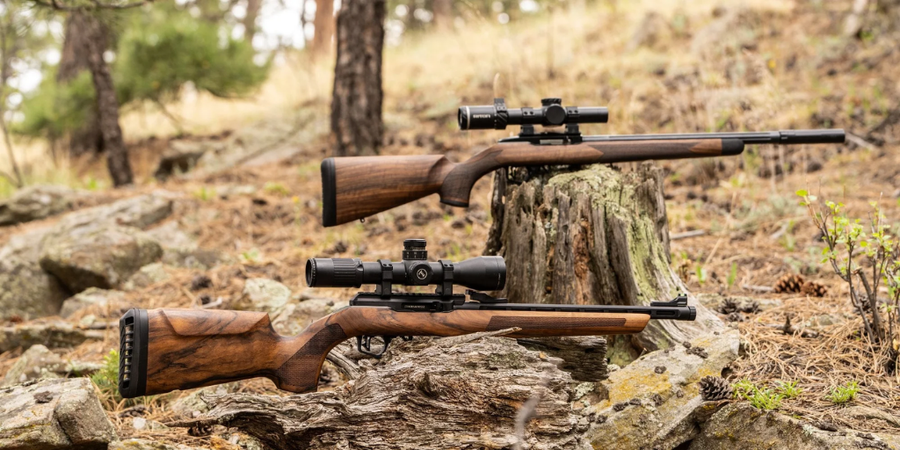
The influence of classic sporter geometry remains visible in modern hunting stocks. TheWOOX Elegante Sportercarries that idea forward with a slim forend, traditional grip geometry, and lightweight handling designed for long days in the field.
Beneath that familiar profile sits a modern aerospace-grade aluminum mini-chassis. The result is a rifle stock that combines hand-selected American walnut with the engineering consistency expected from a contemporary hunting platform, reflecting acraft tradition that traces back to Bergamo, Italy, in 1937.
The appeal of the classic sporter stock extends beyond handling characteristics. Hunting rifles often remain in service for decades, accumulating field marks, wear patterns, and stories unique to their owners.
Unlike synthetic materials that remain largely unchanged over time,walnut develops a patina shaped by use. For many hunters, that evolving character is part of the appeal, and one reason traditional sporter profiles continue to endure.
Classic Sporter Stock vs Modern Hunting Stock
The line between a classic sporter stock and a modern hunting stock has become less rigid. Many contemporary hunting rifles blend traditional geometry with precision-inspired improvements.
The comparison still helps explain what defines a true sporter profile. Neither design is universally better.

The right choice depends on how the rifle will actually be used. A hunter covering steep terrain and taking fast shots may prefer traditional sporter geometry, while a hunter shooting longer distances from supported positions may benefit from a more structured precision-hunting stock.
The geometry that serves a backcountry elk hunter may differ from the geometry that serves a hunter spending most of the season shooting from a bipod.
FAQ
What is a sporter rifle stock?
A sporter rifle stock is a hunting stock geometry designed around field carry, fast mounting, and natural handling rather than positional shooting support. It typically uses a slim forend, traditional grip angle, moderate weight, and comb geometry shaped around natural field positions during hunting.
What is the difference between a sporter stock and a hunting chassis?
A sporter stock prioritizes mobility and carry comfort, while a hunting chassis prioritizes shooting stability and modularity.
Sporter stocks typically use slimmer forends, more traditional grip angles, and lighter profiles optimized for movement in the field. Chassis systems often include vertical grips, flatter forends, accessory mounting options, and more adjustability for optics and supported shooting.
Why do hunters still prefer classic sporter stocks?
Hunting rifles may be carried for hours before a shot opportunity appears. Balance, carry comfort, and natural handling therefore influence the field experience far more often than firing characteristics alone.
Are classic sporter stocks good for long-range shooting?
They can work for long-range hunting, but they are not optimized for it.
Precision-oriented rifles and chassis systems often provide flatter forends, more vertical grip geometry, and adjustable cheek height that better support prone or supported shooting positions.
Classic sporter stocks prioritize field mobility first.
Are all walnut rifle stocks considered sporter stocks?
No. Material alone does not define a sporter stock.
A rifle may use American walnut and still follow modern geometry, thumbhole ergonomics, or precision-oriented design. A true sporter stock is defined primarily by shape and intended use.
Why is it called a sporter stock?
A sporter stock takes its name from sporting and hunting rifles. The profile developed to support practical field use, emphasizing balanced carry, quick mounting, and natural handling rather than the specialized features commonly found on target or precision rifles.