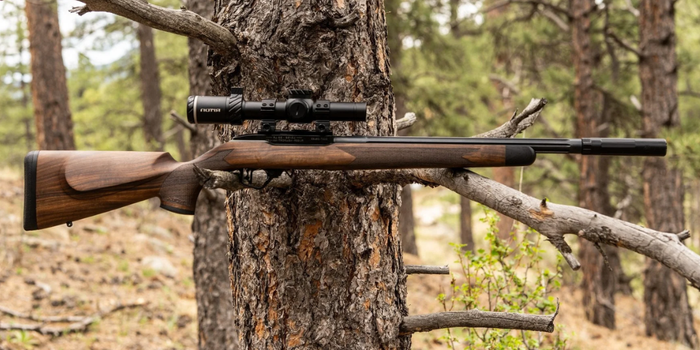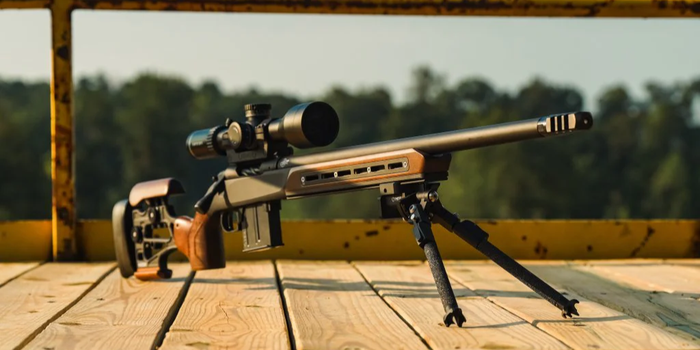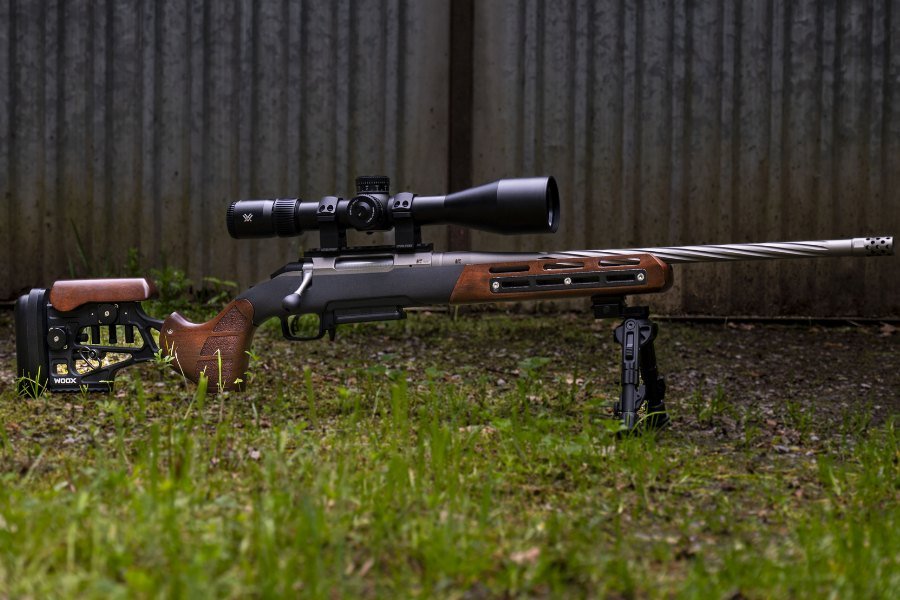
The Ruger American Gen II gives owners a more adjustable factory starting point than the original Ruger American.
Adjustable length of pull, removable comb options on many configurations, a soft rubber recoil pad, and Ruger’s Power Bedding system give the Gen II a different starting point than the original rifle. A stock upgrade is not a default step after purchase.
The decision starts after the factory rifle has been evaluated in its actual use case.
For a Ruger American Gen II owner considering a stock change, there are things worth confirming first.
Confirm the Exact Rifle Configuration
The Ruger American Gen II name identifies the platform. It does not confirm stock compatibility.
Before looking at any aftermarket stock, confirm the rifle’s exact configuration:
- action length
- caliber family
- magazine setup
- barrel profile
- rifle variant
Stock fitmentdepends on inlet dimensions, magazine pattern, and barrel clearance, not model branding.
Ruger American Gen II variants can share the same family name while differing in barrel profile, magazine setup, or model-specific configuration. Compatibility begins with measurements and configuration details, not assumptions.
WOOX Ruger American Gen IIcompatibility varies by stock model and inlet configuration. Before purchasing, owners should verify action type, magazine system, barrel profile, and the specific WOOX compatibility table for the stock they are considering.
Owners who skip this step often create avoidable problems: magazine incompatibility, barrel-channel mismatch, or a stock that technically mounts but does not support the rifle as intended.
Evaluate What the Factory Stock Already Addresses
The Ruger American Gen II factory stock provides a functional starting point, but different rifle configurations create different demands in fit, balance, rigidity, and long-term ownership.
Ruger’s Gen II platform includes:
- Adjustable length of pull through a spacer system
- A soft rubber recoil pad
- Removable comb options on many configurations
- Various barrel profiles depending on model configuration
- A Power Bedding system designed to provide a consistent interface between the action and stock
Those features change what still needs to be addressed. The issue may no longer be basic fit or recoil comfort but how the rifle balances once optics, suppressors, or bipods enter the system.
If the factory setup works for the current configuration, the next question is whether the rifle’s role has expanded beyond the original design priorities.
A stock upgrade becomes meaningful when the rifle’s handling characteristics no longer match its intended role.
For owners looking beyond factory configurations, a stock upgrade can introduce changes in rigidity, balance, and long-term rifle ownership that are difficult to achieve through accessories alone.
A rifle carried all day through rough country rarely benefits from the same stock geometry that excels from a bipod, tripod, or rear bag. The stock configuration should match how the rifle is carried, supported, and shot.
Check Whether Optics Changed the Rifle’s Balance
A lightweight hunting rifle configured around a 14–18 oz optic behaves differently once a 30 oz precision optic, suppressor, bipod, or rail-mounted accessory package changes how the rifle settles and loads under recoil. Even scope mounting height can change how naturally the rifle settles behind the glass.
Many owners adjust cheek risers or sling positions when the actual issue is that the rifle now balances differently.
A lightweight hunting rifle with a heavier optic, suppressor, bipod, or rail-mounted accessory package can feel less neutral in the hands and less natural from field positions. That can slow target acquisition from unsupported positions and increase fatigue during longer field carries.
At this point, the rifle should be evaluated as a complete system rather than as a factory rifle. Optics, suppressors, bipods, and mounting choices all influence how the rifle balances and behaves under recoil.
For many owners, this is when stock geometry, rigidity, and balance become mechanical considerations rather than cosmetic ones.
Identify the Problem Before Replacing the Stock
That issue is usually one of four things.
1. Rigidity
A hunting stock that feels adequate during casual bench shooting can begin to show limitations once optics get heavier or bipods enter the system.
A stock does not create accuracy. A more rigid stock can reduce one source of unwanted movement and flex in the rifle system when the rifle is supported or loaded under recoil.
2. Recoil Behavior
Stock geometry influences how recoil travels into the shoulder, how quickly the rifle settles back onto target, and how comfortable repeated shooting feels over time.
The factory stock may already address this for lightweight hunting applications.
A rifle used for repeated range sessions, heavier optics, or prone shooting often asks more from stock geometry.
3. Balance
A rifle that carries well is not always a rifle that settles well. Likewise, a rifle optimized for prone shooting can become tiring to carry through rough country.
Balance is not total weight. Balance is where the weight lives.
4. Long-Term Ownership
Some owners are solving for the next season. Others are building a rifle they expect to carry for decades and eventually hand down. Those decisions usually lead to different stock priorities.
When a Different Stock Architecture Starts Making Sense
While many modern rifle stocks use polymer, composite, or fully synthetic chassis systems, WOOX continues to build around American walnut and aluminum hybrid architectures designed to combine mechanical structure with the long-term ownership qualities that have defined walnut rifle stocks for generations.
That approach becomes more relevant when a rifle’s requirements extend beyond basic fit and into questions of rigidity, balance, and long-term ownership.
The objective is not simply to replace a factory stock. WOOX combines machined aluminum structure with American walnut to support a mechanically consistent stock architecture while preserving the balance, feel, and long-term ownership qualities many shooters still value in a rifle stock.
For rifles running heavier optics, bipods, suppressors, or more supported shooting positions, stock rigidity and balance become increasingly important considerations. This is where WOOX Ruger American Gen II stock and chassis options may become more relevant, depending on the exact rifle configuration.
For many owners, American walnut remains part of the appeal because handling marks, oil from the hands, and years of use become part of the stock’s character rather than something to conceal.
The right configuration depends on whether the rifle spends more time in field carry, supported shooting, or under heavier optic loads.
Does WOOX Exactus Fit the Ruger American Ranch?
Not for the current Exactus Ruger American inlet. Current Exactus fitment excludes Ranch and Rimfire configurations.
For the current Ruger American Exactus inlet, WOOX lists Ruger American Short Action Centerfire Gen I and Gen II configurations when the rifle matches the current compatibility table. Supported models include Standard, Target, Predator, Hunter, Camo, and Compact. Ranch and Rimfire configurations should not be treated as compatible with the current Exactus Ruger American inlet.
WOOX Ruger American Gen II compatibility may vary by product. Before ordering any WOOX stock or chassis, confirm the current product page, compatibility table, magazine requirements, barrel profile, and inlet configuration.
Final Check Before Upgrading
Before replacing the stock on a Ruger American Gen II, confirm these things:
- Exact rifle compatibility: Configuration matters more than branding.
- What the factory stock already addresses: Fit, recoil comfort, and adjustability may already be sufficient.
- How optics and accessories changed balance: The issue may not be the original stock.
- The actual problem being solved: Rigidity, recoil behavior, balance, or long-term ownership.
- How the rifle is used: Field carry and supported shooting usually demand different stock priorities.
A stock upgrade becomes valuable when it addresses a defined mechanical or handling problem.
The Ruger American Gen II already addresses more factory-fit concerns than the original platform.
The right upgrade begins with identifying the specific problem being solved: fit, balance, recoil behavior, optic weight, support requirements, or long-term ownership goals.
Once that problem is clearly defined, it becomes much easier to determine whether the factory stock already meets the requirement or whether a different stock architecture offers a meaningful advantage.
FAQ
Is upgrading the Ruger American Gen II stock worth it?
A Ruger American Gen II stock upgrade can be worthwhile when the factory stock no longer matches the rifle’s intended use. Common reasons include improving rigidity, changing rifle balance, accommodating heavier optics, or building a rifle for long-term ownership.
Can a heavier scope affect Ruger American Gen II rifle handling?
Yes. A heavier optic can change rifle balance and weight distribution, which may affect handling, recoil behavior, and shooter comfort. In some cases, these changes lead owners to evaluate different stock options.
What problems does an aftermarket rifle stock solve?
Most aftermarket stocks address one or more of four areas: rigidity, recoil behavior, rifle balance, or long-term ownership preferences. The right stock depends on the rifle’s intended application.
Can changing a stock improve accuracy?
A stock does not create accuracy on its own. However, a more rigid stock can reduce unwanted flex and improve consistency in how the rifle system behaves under support and recoil.
Does the Ruger American Gen II factory stock need to be replaced?
Not necessarily. The Gen II factory stock already includes adjustable length of pull, a soft rubber recoil pad, removable comb options on many configurations, and Ruger’s Power Bedding system. Many hunters may find the factory stock meets their needs without modification.