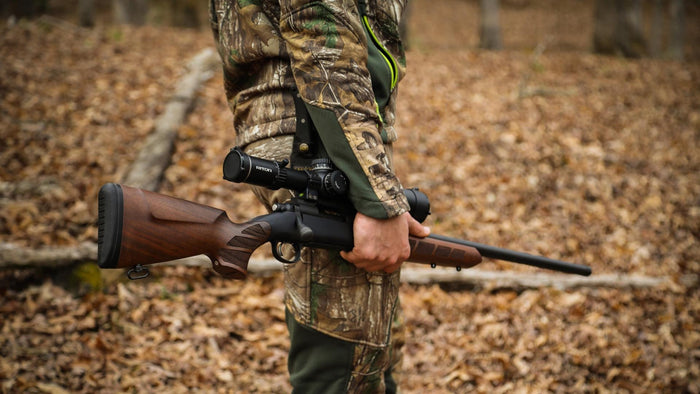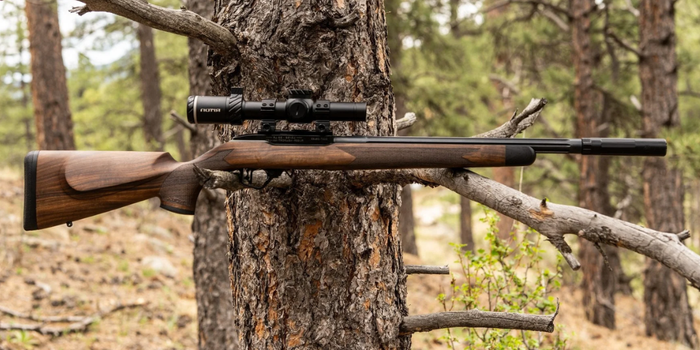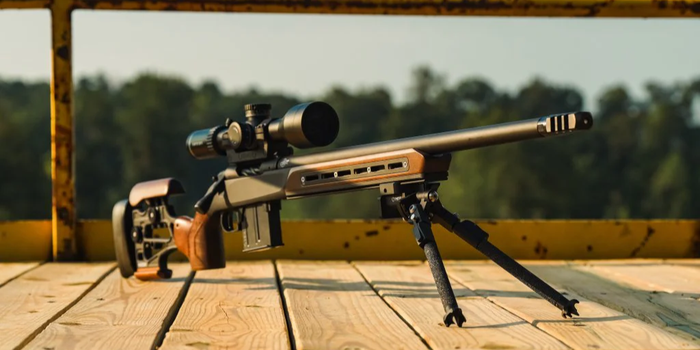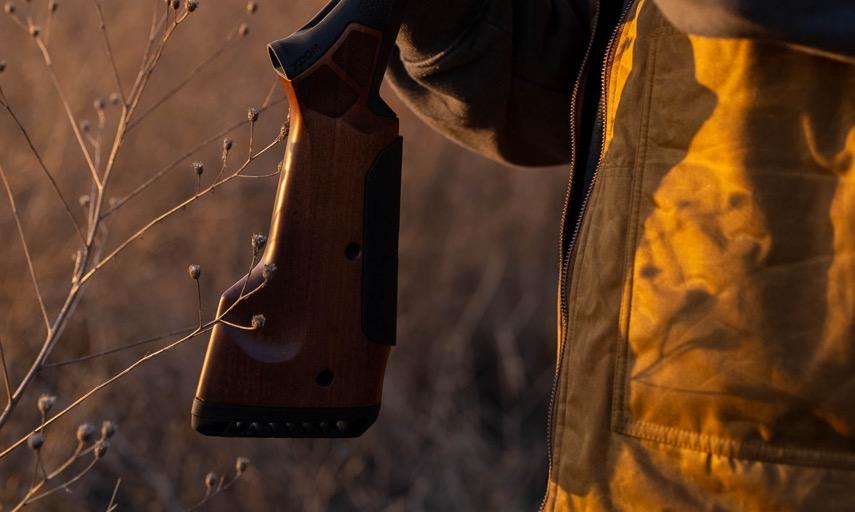
You mount a scope on your lever action expecting a straightforward improvement. At the bench, it often feels that way. The image is clearer, the target is easier to define, and the rifle seems more precise. Then you move out of that controlled environment—standing, shooting offhand, maybe running a few faster follow-up shots on a .45-70—and something starts to feel off.
Not dramatically wrong. Just inconsistent.
Your eye doesn’t land behind the optic in the same way every time. Your cheek isn’t fully anchored into the stock; it hovers slightly above it. You find yourself making small, almost unconscious adjustments to find the sight picture. None of this completely ruins accuracy, but it introduces variability. And that variability compounds.
Most shooters assume the issue is the optic. So they upgrade the scope. That’s where the mistake begins.

Why Lever Actions Feel “Off” With a Scope
To understand the issue, you have to start from design intent.
Traditional lever-action rifles—whether it’s a .30-30 carried in the woods or a .44 Mag or .45-70 used for heavier applications—were built around iron sights positioned close to the bore. That requirement dictates everything about the stock geometry. The comb sits low because the shooter’s eye is meant to sit low.
That design works exactly as intended.
The problem appears the moment you introduce an optic. A typical scope setup raises your sightline by nearly an inch. The rifle, however, remains unchanged. The comb is still where it was designed to be.
So your body compensates.
You lift your head slightly off the stock. Cheek pressure decreases. Instead of the rifle locking into your face in the same position every time, you begin to “find” the sight picture with small adjustments. At first, this feels manageable. Over time—and especially under recoil—it becomes the limiting factor.
The rifle no longer returns to the same position on your face. And once that consistency is gone, everything downstream is affected.
The Geometry — Measured, Not Assumed
Iron sights typically sit around 0.5 inches over bore. A standard scope setup places the optic centerline at roughly 1.4 to 1.5 inches over bore. That creates a vertical difference of approximately 0.9 to 1.0 inches.
That distance has to be absorbed somewhere.
If the stock does not provide that adjustment, your body does—usually by lifting your cheek off the comb, which immediately introduces instability. In most setups, the correction required is not arbitrary. You are typically looking at about 0.75 to 1.1 inches of comb height adjustment to bring the system back into alignment.
Why Upgrading the Scope First Makes It Worse
Upgrading optics feels like progress, and in isolation, it is. Better glass improves clarity, but it also reduces tolerance.
Higher-quality scopes require more precise eye positioning. Any inconsistency in head position becomes immediately visible. You start to see shadowing, inconsistent sight picture, and slower target acquisition. The scope didn’t create the problem. It simply removed the margin that was hiding it.
Fit Before Function
The stock is the interface between the shooter and the rifle. It determines head position, cheek weld, and recoil behavior.
The optic depends on that alignment. Fix the interface first. Then optimize the optic.
What Changes When the Geometry Is Correct
The rifle comes to your shoulder, and your eye is already aligned. No searching. No adjustment.
Cheek pressure remains consistent through recoil. This is not just comfort. This is repeatability.
Real Setup — Henry Big Boy .45-70
With the factory stock, shooters often lift their head slightly. Under recoil, cheek contact breaks.
Correct the comb height, and the system changes. The eye aligns naturally. The rifle returns to the same position. Same rifle. Same optic. Different interface.
A scoped lever action introduces a geometric mismatch that cannot be solved with optics alone.
It must be solved at the interface between the shooter and the rifle. Fix the geometry first. Everything else follows.