Getting the AR-15 length of pull right is not about copying one number. It is about making the rifle meet the shooter in the same place every time.
Length of pull, or LOP, is the distance from the trigger face to the rear of the stock. On an AR-platform rifle, that distance changes with stock position, optic setup, clothing, gear, and the way the shooter mounts the rifle.
For WOOX Vigilante users, the stock is built for compatible Mil-Spec sized carbine receiver extension tubes and offers multiple length-of-pull positions. WOOX lists the Vigilante stock with an LOP range of 11.5 inches to 14.5 inches without spacers, giving the shooter room to adjust for optics, gear, and shooting position. The Vigilante compatibility chart lists AR15, M4, M16, and AR10 compatibility, with the important note that the stock is compatible only with Mil-Spec sized carbine receiver extension tubes.
The correct setting is the one that lets the shooter shoulder the rifle naturally, see through the optic without hunting for the sight picture, and keep consistent contact with the stock.
What Is AR-15 Length of Pull?
Length of pull is the working distance between the trigger and the rear face of the stock.
If the stock is too long, the shooter may have to reach for the grip or push the shoulder forward to seat the rifle. That can pull the head out of position and make the optic harder to find.
If the stock is too short, the shooter may feel crowded behind the rifle. The face may come too close to the charging handle, the elbows may collapse inward, and eye relief can become inconsistent with magnified optics.
The goal is not the longest setting or the shortest setting. The goal is a stock position that gives the shooter a repeatable mount.

How to Set AR-15 LOP Safely
Start with a cleared rifle. Remove the magazine, lock the bolt open, and visually and physically confirm the chamber is empty. Keep the rifle pointed in a safe direction during all fit checks.
Then follow this process:
- Set the stock near the middle of its adjustment range.
- Shoulder the rifle in your normal stance.
- Take a natural firing-hand grip.
- Bring your head to the stock without stretching your neck forward.
- Check whether the optic or sight picture appears naturally.
- Adjust the stock one position shorter or longer as needed.
- Repeat from standing, kneeling, and any other position you actually use.
The old elbow-crease method can provide a rough reference, but it should not be treated as the final answer. AR-15 stock fit is affected by optic height, eye relief, stance, body shape, and gear.
A better final test is simple: shoulder the rifle from a relaxed ready position and see whether the sight picture appears without adjustment.
Best LOP for AR-15s with LPVOs
Low Power Variable Optics, or LPVOs, make LOP more sensitive because eye relief matters.
At higher magnification, the shooter usually has less room for error behind the optic. If the stock is too short, the eye may sit too close. If the stock is too long, the shooter may stretch into the rifle and lose a consistent cheek position.
For an AR-15 with an LPVO, many shooters end up running the stock slightly longer than they would with a red dot. The exact setting depends on the optic, mount height, eye relief, and shooting position.
A practical starting point:
- Set the LPVO at its highest magnification.
- Shoulder the rifle naturally.
- Adjust the stock until the sight picture appears without shadowing.
- Check the same setting from standing, kneeling, prone, and supported positions.
- Shorten or lengthen one click at a time until the rifle mounts cleanly.
Do not choose LOP by optic type alone. Let the optic’s eye relief and your natural rifle mount decide the final setting.
Ideal LOP for Red Dot Sights
Red dots are more forgiving than LPVOs because they do not depend on the same eye-relief window.
With a red dot, many shooters prefer a slightly shorter stock position because it allows a compact, upright mount and fast sight acquisition. That does not mean every shooter should collapse the stock all the way. If the rifle feels crowded, if the head drops too far, or if the shoulder position becomes inconsistent, the stock is too short.
A good red-dot setup should let the shooter bring the rifle up and see the dot without searching for it.
Use this test:
- Start with the stock one or two positions shorter than your LPVO setting.
- Shoulder the rifle with both eyes open.
- Check whether the dot appears naturally.
- Move through standing, kneeling, and supported positions.
- Lengthen the stock if the rifle feels cramped or unstable.
The right red-dot LOP is the one that gives a fast, natural mount without collapsing the shooter’s posture.
How Body Armor Changes LOP
Body armor or a plate carrier adds material between the shooter and the stock. That reduces available shoulder space and changes where the stock sits.
In many cases, the rifle will need to be set shorter when armor is worn. The exact amount depends on the carrier, plate thickness, shoulder strap shape, and how the rifle is mounted.
Do not rely on an inch number alone. Put on the gear, shoulder the rifle, and adjust the stock until the buttplate sits securely rather than sliding across the front of the carrier.
A shorter setup can help keep the rifle closer to the body, but it still has to preserve the sight picture and trigger-hand position.
How Winter Layers Affect LOP
Cold-weather clothing can change stock fit just like armor, but in a different way.
Heavy jackets, wool layers, and insulated shells add bulk between the stock and the body. Unlike armor, soft layers compress. That means the rifle may feel correct at first and then settle differently after repeated mounting.
In winter clothing, start by shortening the stock one position from your normal setting. Shoulder the rifle several times and check whether the stock reaches a consistent pocket instead of floating on fabric.
Test from standing and kneeling. Thick layers can restrict shoulder movement, so a setting that works in a T-shirt may not work in a heavy jacket.
The stock should meet the shooter through the clothing. It should not depend on fabric compression to feel stable.

Where WOOX Vigilante Fits In
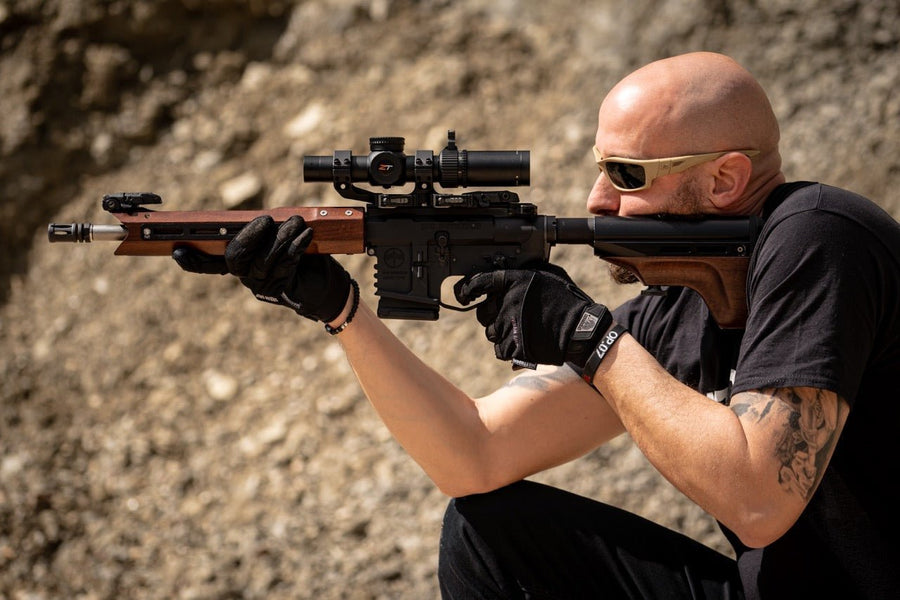
The WOOX Vigilante stock is designed for AR-platform rifles using compatible Mil-Spec sized carbine receiver extension tubes. WOOX lists compatibility with AR15, M4, M16, and AR10 platforms, with the important compatibility note that the stock is compatible only with Mil-Spec sized carbine receiver extension tubes.
The Vigilante stock uses American Walnut + Hard Anodized Aluminum, and WOOX lists multiple length-of-pull positions for adjustment depending on gear, optics, or stance. WOOX’s product specifications list the stock at 7.5 inches L x 1.5 inches W x 5 inches H, with an LOP range of 11.5 inches to 14.5 inches without spacers and a listed weight of 1.35 pounds.
That matters because LOP is not a one-time number for every condition. A shooter may use one setting for an LPVO, another for a red dot, another with armor, and another with winter clothing.
The WOOX approach is simple: keep the material honest, keep the interface stable, and give the shooter enough adjustment to set the rifle for the work in front of it.
Why LOP Consistency Matters
Length of pull affects the shooter’s contact with the rifle.
When LOP is set correctly, the stock returns to the same shoulder position, the head comes to the same place, and the optic appears without the shooter searching for it. That consistency matters more than a universal number.
A stock cannot fix poor fundamentals, bad optic placement, or the wrong mount height. It can only give the shooter a repeatable interface.
That is where LOP matters most: not as a measurement on paper, but as the distance that lets the rifle mount the same way every time.
Quick Setup Guide
Use this as a practical starting point:
| Setup | LOP Direction | What to Check |
|---|---|---|
| LPVO | Usually slightly longer | Eye relief at highest magnification |
| Red dot | Often slightly shorter | Fast dot pickup without cramped posture |
| Body armor | Usually shorter | Buttplate seats securely on gear |
| Winter layers | Usually shorter | Stock reaches a stable pocket through fabric |
| Bench/prone | May need longer than standing | Neck stays relaxed behind optic |
| Close movement / compact setup | May need shorter | Rifle stays manageable without collapsing posture |
These are starting points, not rules. The final setting should be confirmed by shouldering the rifle, checking the sight picture, and testing the positions you actually use.
FAQs
What is length of pull on an AR-15?
Length of pull is the distance from the trigger face to the rear of the stock. On an AR-15 with an adjustable stock, LOP changes as the stock is extended or collapsed.
What is the correct AR-15 length of pull?
There is no single correct number for every shooter. The right LOP depends on the shooter’s body, optic, stance, clothing, gear, and shooting position. The correct setting is the one that gives a repeatable shoulder position and a natural sight picture.
What LOP works best with an LPVO?
LPVOs often work better with a slightly longer stock setting than red dots because eye relief becomes more important, especially at higher magnification. Set the optic to its highest magnification, shoulder the rifle naturally, and adjust the stock until the sight picture appears clearly.
What LOP works best with a red dot?
Red dots are more forgiving. Many shooters use a slightly shorter stock setting with red dots because the rifle can be mounted more compactly. The stock should still be long enough to avoid a cramped grip or collapsed posture.
How does body armor affect AR-15 LOP?
Body armor adds material between the stock and the shoulder. Most shooters need to shorten the stock when wearing armor or a plate carrier. The exact adjustment depends on the gear and how the stock seats against it.
Does winter clothing change AR-15 LOP?
Yes. Heavy jackets and insulated layers add bulk and can change how the stock sits. Shorten the stock as needed and test the rifle in the actual clothing you plan to wear.
Can one LOP work for all conditions?
Sometimes, but not always. Optics, gear, clothing, and shooting position can all change the best setting. Adjustable stocks exist because the rifle may need to fit differently across conditions.
What is the WOOX Vigilante LOP range?
WOOX lists the Vigilante stock with an LOP range of 11.5 inches to 14.5 inches without spacers. Always check the current product page and compatibility notes before ordering.