If you spend enough time shooting at distance, one thing becomes obvious pretty quickly: bullets do not fly in straight lines.
At 100 yards, it can look that way. The shot breaks, the target rings, and everything feels simple. But once you start stretching things out, the truth shows up fast. The bullet is already falling the moment it leaves the muzzle, and the farther it travels, the more that drop matters.
That curved path is what shooters mean when they talk about bullet trajectory.
Understanding trajectory is part of becoming a better rifleman. It helps explain why one rifle setup feels easy at short range but starts demanding real correction once the target moves farther out. It also explains why bullet velocity matters so much, and why every shooter eventually has to learn how to calculate bullet drop.
Why Bullets Drop in the First Place
A bullet leaves the barrel moving fast, but it is not floating. The instant it exits the muzzle, gravity starts pulling it down.
That part never changes. Gravity acts on every shot the same way.
What changes is how long the bullet stays in the air. A bullet moving faster reaches the target sooner, which means gravity has less time to pull it down. A slower bullet stays in flight longer, which gives gravity more time to work.
That’s why bullet drop becomes more noticeable as distance increases. It isn’t that the bullet suddenly starts falling. It was falling the whole time. You just don’t notice it much until the distance is long enough for that drop to matter.
Additionally, the barrel is angled slightly upward relative to the shooter’s line of sight, allowing the bullet torise above the sight line, arc, and then fall back through the zero distance before continuing to drop.

Why Bullet Velocity Matters
This is wherebullet velocity comes into play.Velocity matters because time of flight matters. The faster the bullet gets from muzzle to target, the less opportunity gravity has to drag it down.
That is why faster cartridges tend to produce flatter trajectories. It is also why two bullets fired at the same target distance can require very different elevation corrections.
Of course, speed is only part of the story. Bullet shape matters too. A bullet that holds its velocity well downrange will usually perform better than one that sheds speed quickly. That is where ballistic coefficient comes in, but for most shooters the practical takeaway is simple: some bullets carry better than others, and that changes how much drop you need to account for.
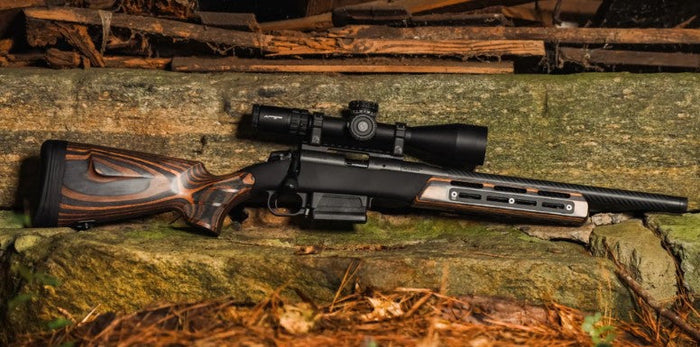
When you start shooting farther, consistency matters just as much as the cartridge. A stable rifle setup makes it easier to apply those corrections the same way every time. That is one reason precision shooters pay close attention to platform rigidity, whether they are building around a bolt gun or running a setup like the WOOX Furiosa precision rifle chassis.
A Simple Bullet Trajectory Example
Let’s use a familiar example:.308 Winchester.
A common long-range load might look like this:
- 175-grain bullet
- muzzle velocity around 2,600 fps
The following bullet drop chart shows approximate trajectory values :-

That last number is where newer shooters usually stop and think about what is really happening. By 1,000 yards, that bullet may have dropped more than~400 inches, which is over33 feet!
That is why long-range shooting is not just “hold center and press.” At a distance, you are managing the trajectory.
Even on lever guns, once shooters start stretching the rifle out or adding modern accessories, better control starts to matter. Upgrades like WOOX lever-action handguards make sense for shooters who want a more modern, stable front end without giving up the lever-action platform.
How to Calculate Bullet Drop (Bullet Trajectory Calculations)
Once you understand what bullet drop is, the next step is figuring out how to predict it.
Most shooters use one of three methods, and in reality, many use all three together.
Ballistic calculators
This is the easiest place to start.
A ballistic app takes your bullet data and environmental conditions and gives you a firing solution. Enter the velocity, bullet weight, ballistic coefficient, and atmospheric conditions, and the app estimates the drop for different distances.
Some of the most commonly used options are:
These tools make it much easier to get close quickly, especially when building data for a new load or rifle.
Scope adjustments
Once you know the drop, you can dial it into the scope.
Most optics adjust inMOA orMILs, and that lets you compensate for the bullet’s arc instead of guessing holdover. For example, a .308 at 1,000 yards may need roughly 35 MOA or around 10 MILs of elevation, depending on the exact load and conditions.
Chronograph data
A chronograph tells you what your ammunition is actually doing, not what the box says it should do.
That matters more than many shooters realize. Real muzzle velocity often differs from printed factory numbers, and even small changes in speed can affect your data downrange. If you want dependable drop calculations, good velocity data is one of the best things you can have.
What This Means in the Real World
At the range, this all comes down to one thing: knowing where your bullet is going before you break the shot.
That is the entire value of understandingbullet trajectory. You are not just learning theory for the sake of theory. You are learning how to make clean corrections, trust your rifle, and avoid guessing when the distance starts to grow.
The shooters who become consistent at distance are usually the ones who stop thinking of trajectory as complicated and start thinking of it as predictable. Once you know your velocity, your drop, and your adjustments, the whole process becomes much more manageable.
FAQ
Why don’t bullets travel in a straight line?
- Because gravity starts acting on the bullet the instant it leaves the barrel. The bullet is always falling during flight.
Does higher bullet velocity reduce bullet drop?
- Yes. A faster bullet reaches the target sooner, which means gravity has less time to pull it down.
How do shooters calculate bullet drop?
- Most shooters use ballistic calculators, chronograph data, and scope elevation adjustments.
What zero distance do most shooters use?
- A 100-yard zero is one of the most common choices because it gives shooters a simple, consistent reference point.
Does bullet spin affect drop and trajectory?
- Yes. Standard right-hand rifling twist (1:8 to 1:12) creates rightward spin drift (~0.2–0.6 mil depending on cartridge and twist rate) and gyroscopic stability. Left-twist reverses drift. Negligible under 400 yards.
Headwind vs. tailwind: how do they impact drop?
- A headwind (wind blowing toward the shooter) increases drag and slightly increases bullet drop, usually only a few inches at long range. A tailwind (wind blowing from behind the shooter) slightly reduces air resistance, allowing the bullet to keep its speed better and travel on a slightly flatter path. For better accuracy in the field, shooters should record both effects in their DOPE charts to make correct adjustments when shooting in different wind conditions.